BESE newsletter

Some highlights of 2024
North Sea – combining reef restoration with aquaculture
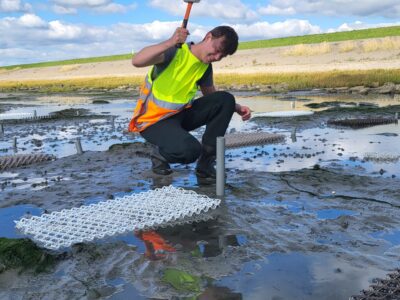
This year marked the field start of a research project in which we combine reef restoration with aquaculture in the North Sea region. We aim to restore biogenic reef species in and near aquaculture sites by providing the right substrates. In the summer of 2024 the substrates were placed in the Voordelta, Netherlands. Monitoring is ongoing to determine which type of substrate and shape performs best for reef restoration in the dynamic North Sea region. Products we trial as substrate are the BESE-elements filled with coconut fiber and oyster shells, BESE-reef paste blocks and off bottom discs, and lastly two types of BESE-mesh (off-bottom). This project is carried out in collaboration with Wageningen Marine Research and funded by the EU (read more about the research project: https://ultfarms.eu/pilots/).
Ambon – coastal protection involving three different ecosystems
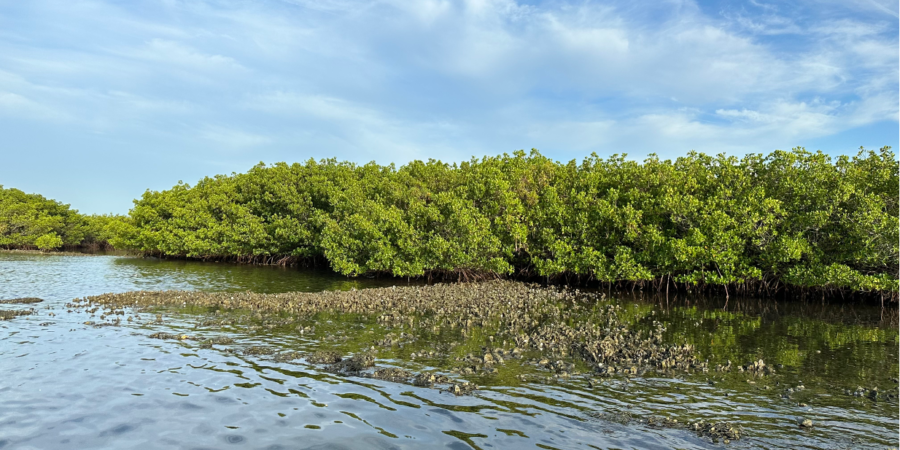
Last May, we returned to Ambon to monitor and further develop our mangrove restoration project with Pattimura University. Over the past two years, BESE-elements helped restore mangroves at two out of three locations. One site thrived, another was swept away by two heavy storms and at the last site the mangroves survive, but struggle. To improve results at this last site, we increased the scale of the pilot and added pre-grown mangroves in BESE-elements. These trees were transplanted with healthy soil into a new site, ensuring better growth conditions. They were deployed behind a natural horseshoe-shaped coral rubble barrier, designed to protect the mangroves as they mature. The barrier also helps catch natural mangrove recruits, enhancing long-term coastal protection and resilience.
Lancaster UK – reversing salt marsh decline with BESE-elements
Along the coastline near Bolton-le-Sands and Hest Bank (UK) marshes are eroding in a rapid pace. As part of the Our Future Coast project, the city council of Lancaster asked us if we could deploy BESE-elements at two different sites. The BESE-elements aim to capture sediment, raise marsh height, and thereby end erosion. Moreover, seeds can be entrapped by the BESE-elements, allowing salt marsh plants to grow and enabling expansion of the marsh area. Monitoring will take place in 2025 to find out if BESE-elements are able to catch sediment and stop erosion. More information in the Storymap of Lancaster City Council.
To read the entire newsletter click below!
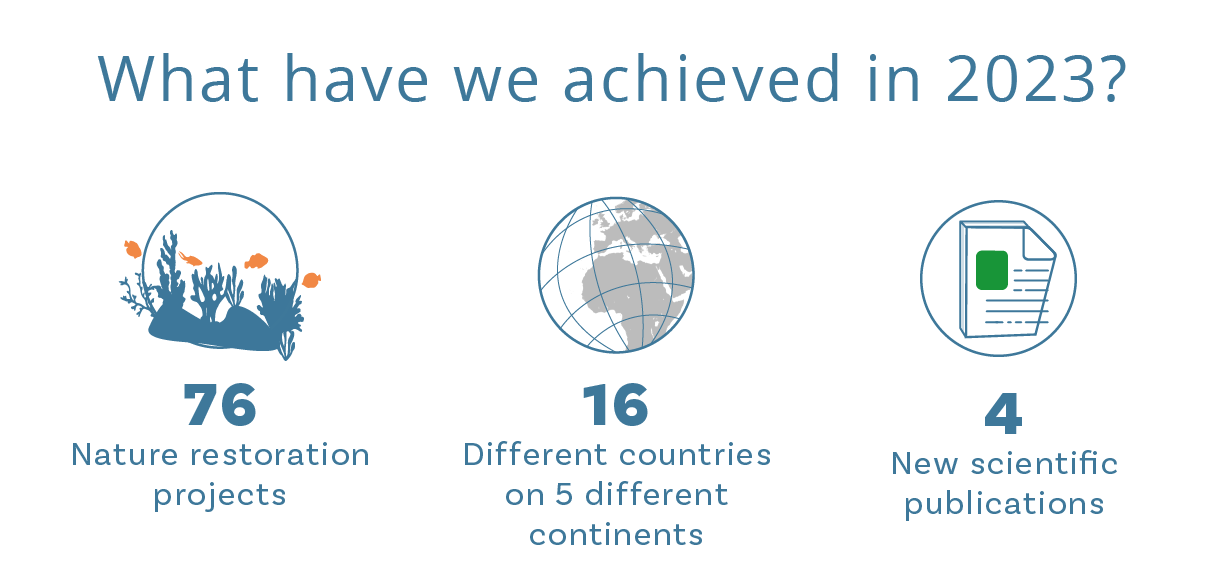
Ecosystem restoration highlights of 2023
You can find the newsletter here.
- Full scale restoration of an eroding riverbank in the Netherlands with BESE-elements.
Last winter (2022/2023), we constructed a nature-inclusive riverbank along a dike near Amsterdam, using BESE-elements to curb erosion and enhance biodiversity. By summer, the riverbank flourished with diverse flora and fauna above and below water. The water board ‘Hollands Noorderkwartier’ and Brunea Hoveniers facilitated this nature-based approach in Kwadijk.
- Best tested material for oyster reef restoration, our BESE-reef paste!
In Bretagne, France, the REEFOREST project by Ifremer tested various shapes of our BESE-reef paste for flat European oyster (Ostrea edulis) restoration. After 13 months, the paste attracted diverse organisms, with large oysters covering it. Wageningen University scientists will soon publish these findings, affirming BESE-reef paste as the top performer.
- Turning coral rubble into artificial reefs with BESE-mesh
Inspired by oyster reef restoration, we innovatively replicated the method for coral restoration in northern Ambon. Collaborating with Pattimura University, we filled BESE-mesh with coral skeletons, creating stable artificial reefs. Plans for 2024 include monitoring the reefs to assess their success in providing settlement grounds for new coral larvae.
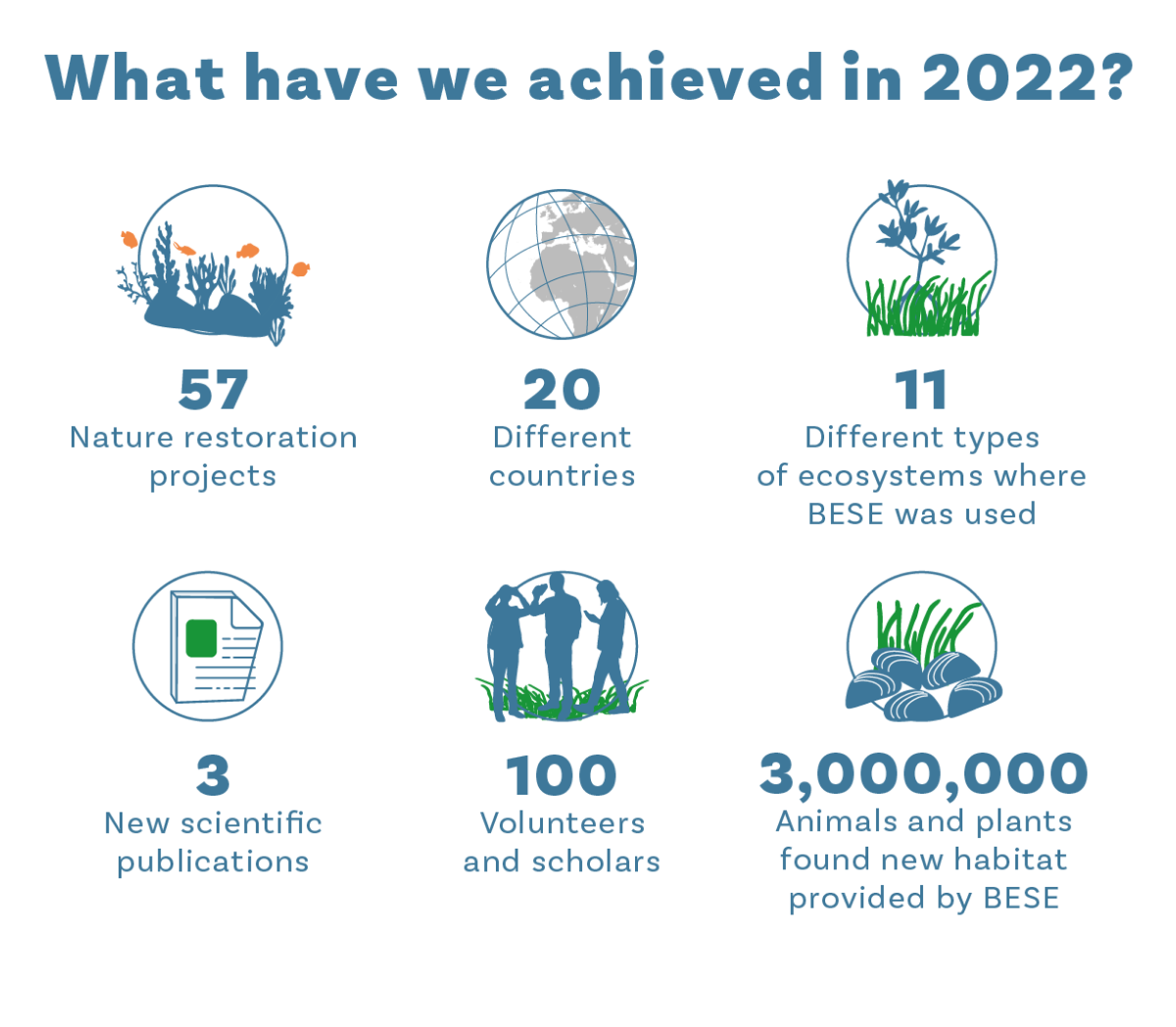
Ecosystem restoration highlights of 2022
You can find the newsletter here.
- Riverbank restoration in The Netherlands
In response to constant riverbank maintenance needs due to boat traffic erosion, BESE-elements offer an eco-friendly alternative to plastic reinforcement. By facilitating vegetation regrowth and wave energy protection, BESE-elements reduce plastic use and long-term maintenance costs. Two Dutch river projects are currently testing this principle, aiming for sustainable solutions.
- Seagrass restoration in Denmark, Corsica and Bonaire
For this highly productive ecosystem three restoration projects with BESE-elements started in 2022. In Denmark a project started to restore seagrass meadows with Van Oord and local enthusiasts. In Corsica techniques are tested to restore la Posidonia in collaboration with the University of Liège. And to wrap it up we recently went to Bonaire to restore seagrass in collaboration with STINAPA.
- Mangrove restoration in Ambon, Indonesia
We returned to Ambon for mangrove restoration. This time we set-up pilots with the BESE-elements on three sites, with different abiotic conditions. We trained local students from Pattimura University to maintain and monitor the progress of these pilots. Moreover, as presenters on a symposium on nature restoration we exchanged knowledge with 150 students of this same University.