Biodegradable Hexagon Structures for Ecosystem Restoration

Hexagon shaped BESE-elements
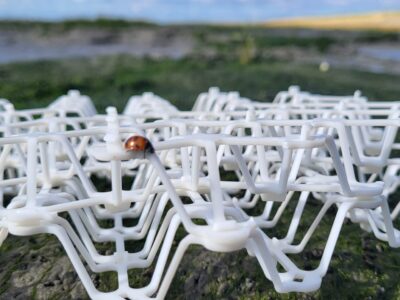
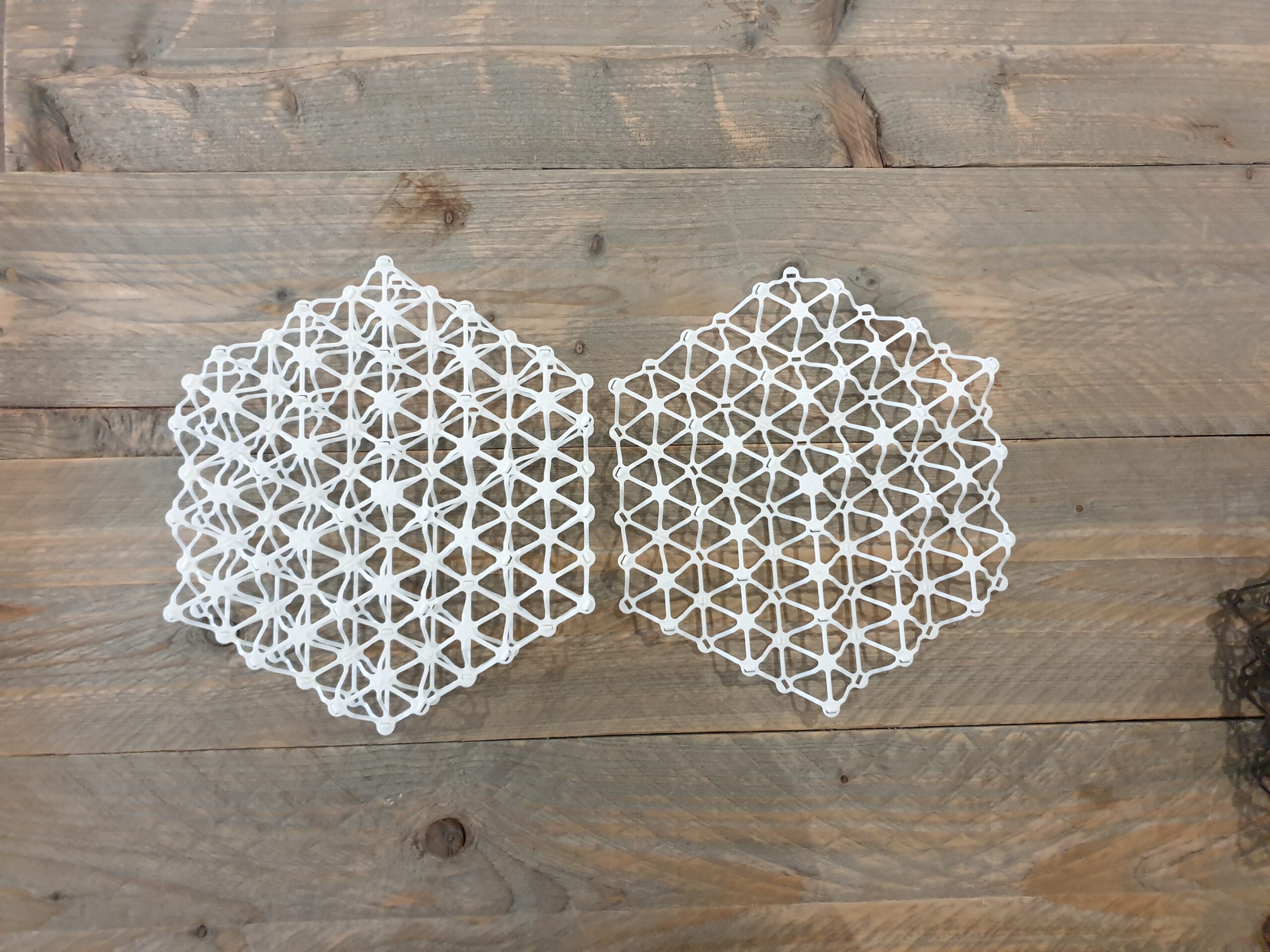
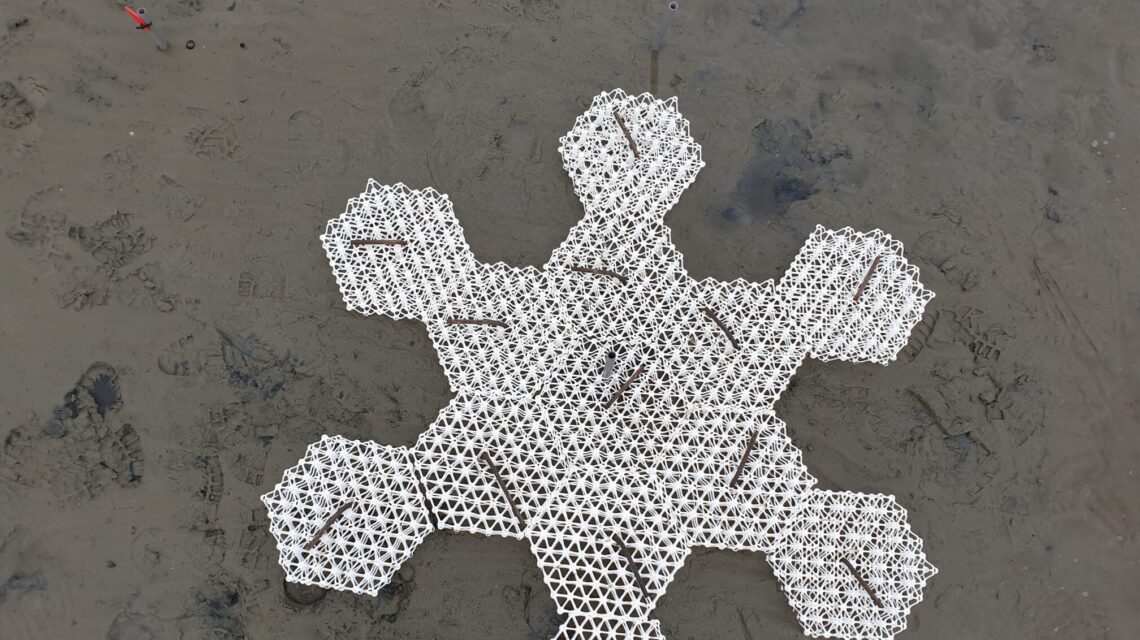
So far, our rectangular BESE-elements were already successful in restoring 11 different types of ecosystems! Efforts to further improve the success of BESE-elements have led to the development of a new product: hexagon-shaped BESE-elements. A product with a new advantageous shape and produced from a new type of biopolymer that shows better degradation in marine environments.
Spatial Arrangements
One of the advantages of the hexagon is that its shape is much more suited to create organic spatial arrangements like the ones in the figure below, which is based on patterns observed in salt marsh vegetation. Vegetation patterns observed in salt marshes, are formed as a result of years of feedback between hydrodynamics, sedimentation and erosion. Therefore, patterns in salt marsh vegetation are optimally designed to acquire and retain sediment, facilitate growth of seedlings and decrease erosion on vegetated patches. Additionally, a complex drainage system that has developed in densely vegetated salt marshes can enhance storm surge buffering capacity and resilience against sea level rise. Preserving or recreating patterns observed in nature will likely help to kickstart ecosystem restoration, by more efficiently facilitating these feedback loops than our larger rectangular BESE-elements.
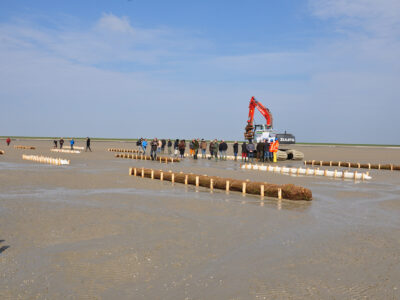
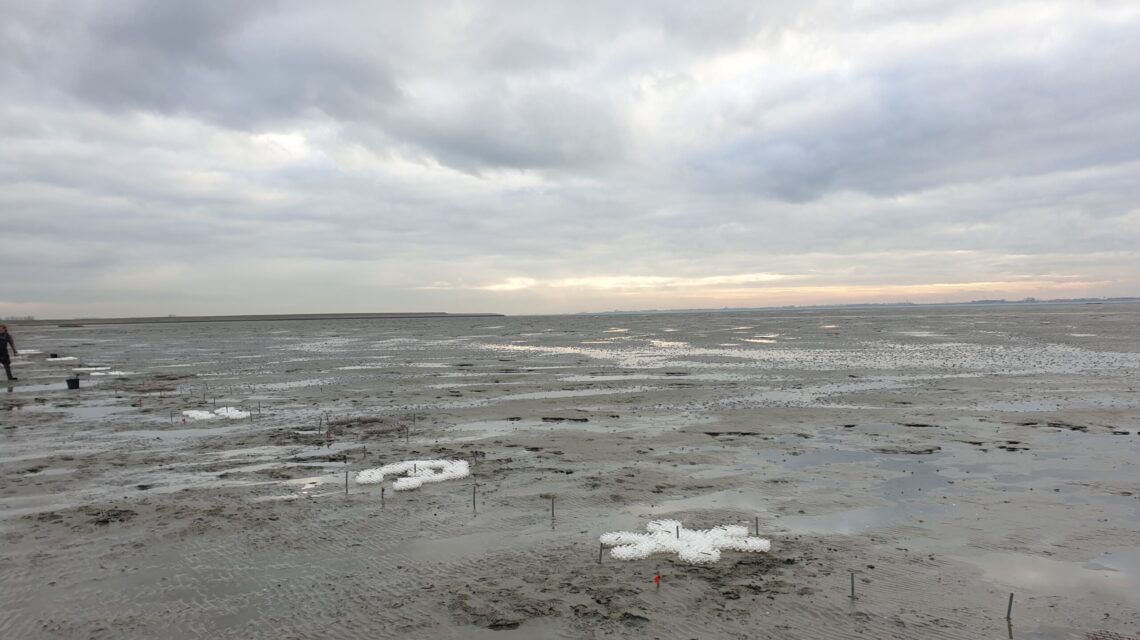
The first experiments using different spatial arrangements are already taking place in a degraded salt marsh in the Netherlands. The spatial arrangements used in this study are based on observed patterns in salt marsh vegetation, mussel beds and radial shapes. Additionally, we are excited to announce that future experiments regarding this subject are already being planned to take place in Florida, USA.


Biodegradability
In collaboration with Rodenburg Biopolymers and BATO, we are developing a PHA biopolymer which we call our Type 3 biopolymer. BESE-elements made of Type 3 are expected to show a better and faster biodegradation in marine environments. To investigate the biodegradability of the Type 3 biopolymer, an experimental setup has been placed out in the field where the biodegradation of Type 3 Hexagons will be compared to elements made of Type 1 (PLA) and Type 2 (PBS) biopolymers. The experiment will be long lastingly monitored and will also take place in Florida, USA, to compare the difference in biodegradation between a tropical and temparate marine climate of the Netherlands.