


Improving salt marsh restoration success by imitating nature. This project explored salt marsh restoration in different climates, comparing transplant survival and recruitment in the US and Netherlands. Using BESE-elements as temporary structural support, we tested whether mimicking natural plant stems could stabilize sediment and protect young marsh plants during early establishment.
Project Overview: Salt Marsh Restoration in Different Climates

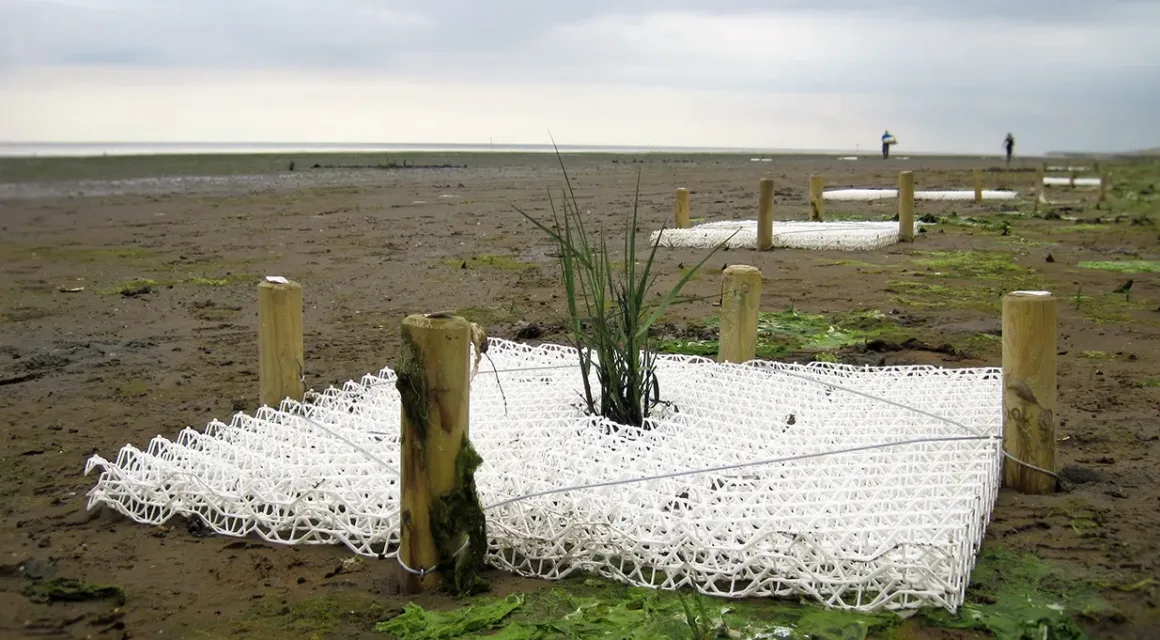
Salt marshes are vital coastal ecosystems, yet restoration often fails when young plants cannot withstand hydrodynamic stress. Our pilot asked: Can temporary structural support improve transplant success across climates? BESE-elements, biodegradable mats, were installed to reduce currents and stabilize sediment. We compared cordgrass (Spartina sp.) survival in protected plots versus bare controls in two climate zones.

Results achieved
- 100% transplant survival in BESE-elements
-
40× shoot increase for cordgrass
-
Six new species via natural recruitment
-
Sediment stabilization and current reduction
Project partners

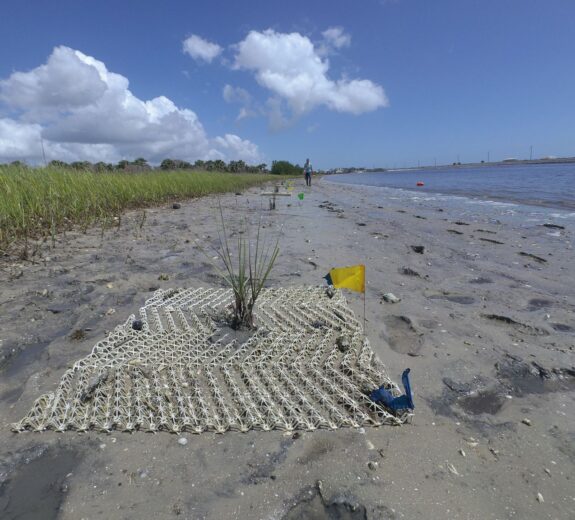
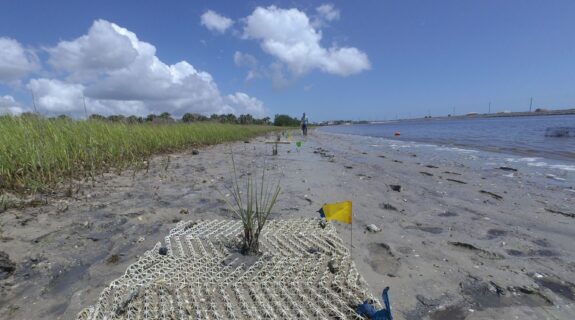
Restoration pilot set-up
Three layers of BESE-elements were placed in 1 m² plots with a single cordgrass transplant in the center. Control plots had identical transplants without mats. Monitoring revealed 100% survival in protected plots versus 0% in controls, confirming the role of structural shelter in early-stage resilience.
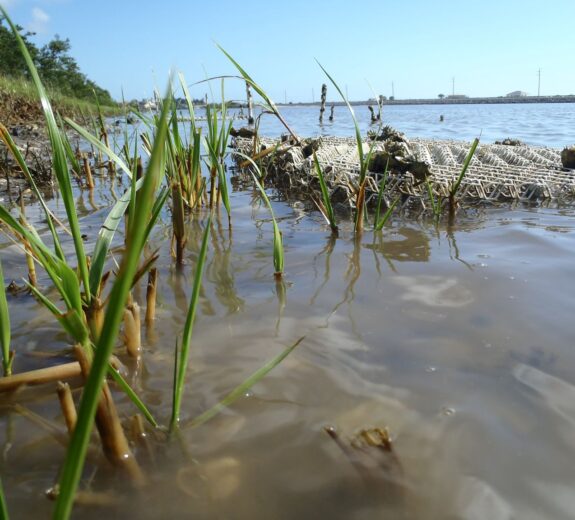
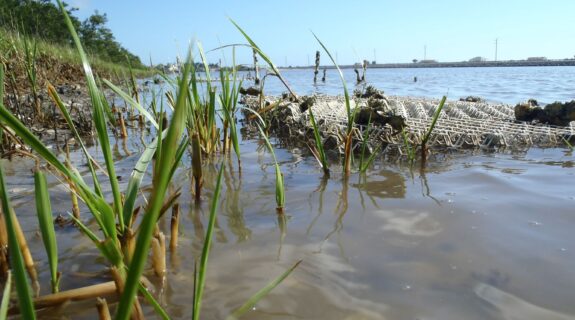
Seed trapping and natural recruitment
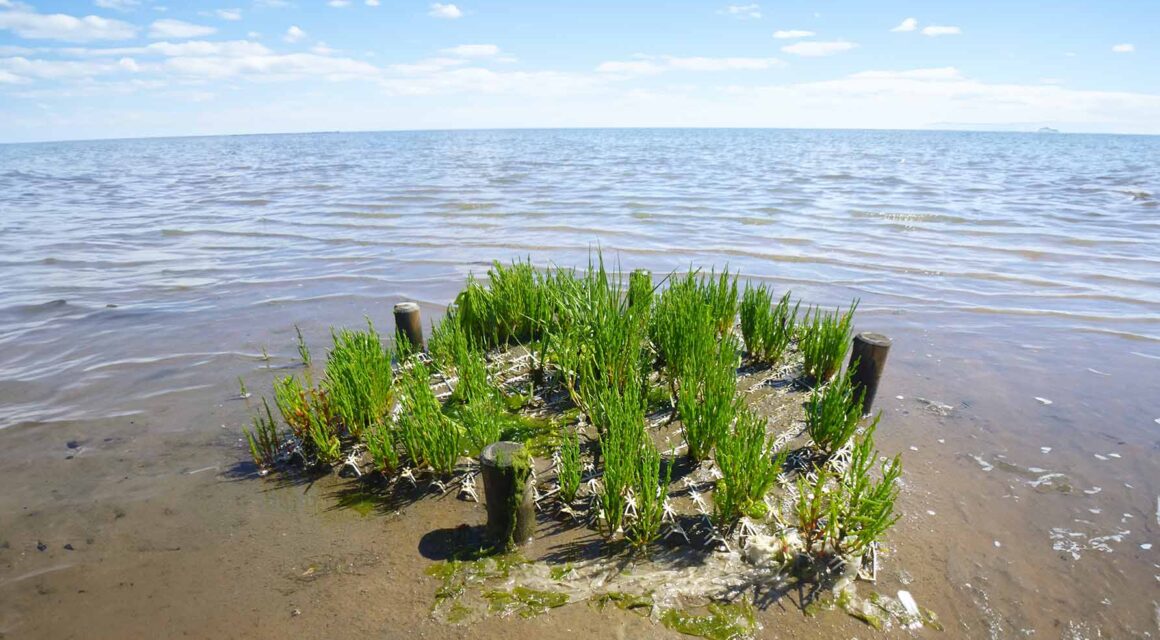
BESE-elements trapped seeds and fine sediment, fostering pioneer species like glasswort (Salicornia). After 16 months, six new indigenous salt marsh species established within protected plots—absent from adjacent pioneer zones—indicating enhanced recruitment and biodiversity.


Protected growth and biodegradation
Experiments in both climates showed that mats shielded plants from waves and currents until they were strong enough to survive independently. Over time, BESE-elements biodegrade, leaving a self-sustaining marsh patch.
Why restore salt marshes?
Salt marshes buffer coasts against erosion, store carbon, improve water quality, and support fisheries. With global decline accelerating, practical, nature-based restoration methods are essential for resilient shorelines.
Results
- 100% transplant survival in BESE-elements
- 40 x Shoot number increase for cordgrass
- 6 new species by natural recruitment
- Higher recruitment success, growth and density
- Sediment stabilization and current reduction
- 3 Scientific publications