


Replacing an eroding bitumen and plastic riverbank with a nature based riverbank. More than 22 plant species settled naturally.
About this project

A pilot project was set up for the Water Board Scheldestromen in Zeeland, the Netherlands. Problemswith shoreline erosion at the project location limited the growth of reed and riparian vegetation. Ourgoal was to prevent shoreline erosion and improve vegetation growth with our biodegradable BESE-elements.
Results achieved
- Erosion halted
- Biodiversity increase
- Water quality increase
Project partners


Biobased instead of plastics
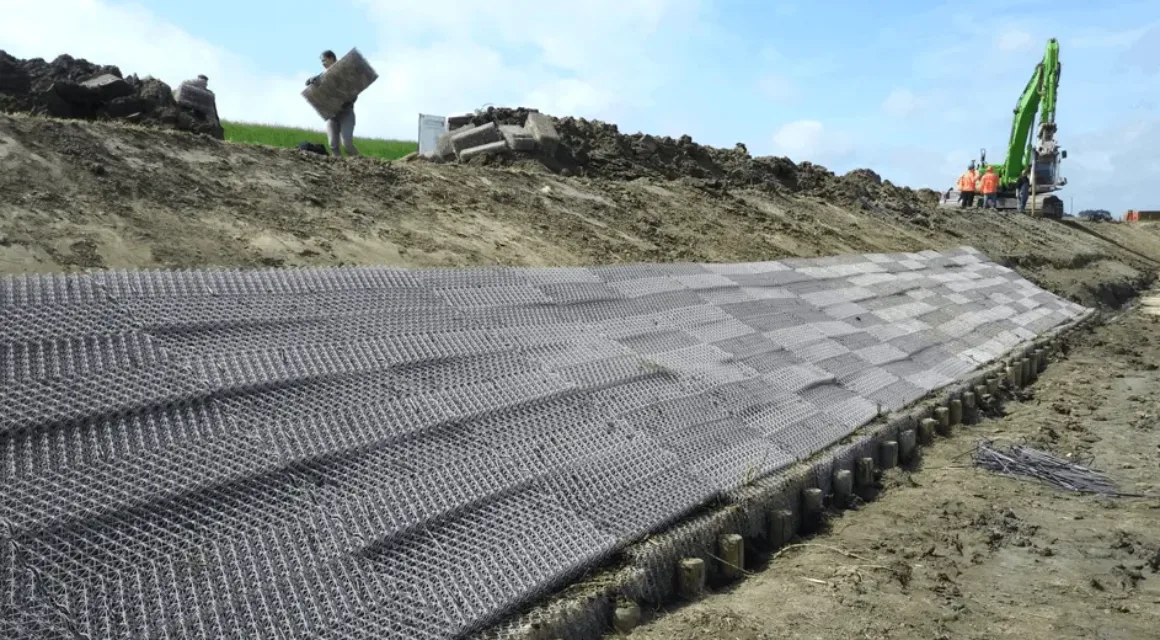
In May 2019, a 44-meter BESE-riverbank was created by placing BESE-elements side by side along the riverbank. The riverbank was excavated to createa smooth surface for optimal placement of the BESE-elements. Soil with reed canes was applied to part of the riverbank. The BESE-elements were then placedon the excavated riverbank and fastened with rebar.


Reed growth after two months
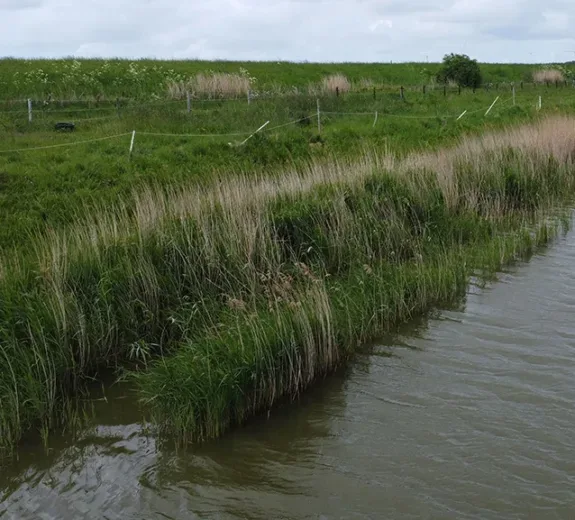
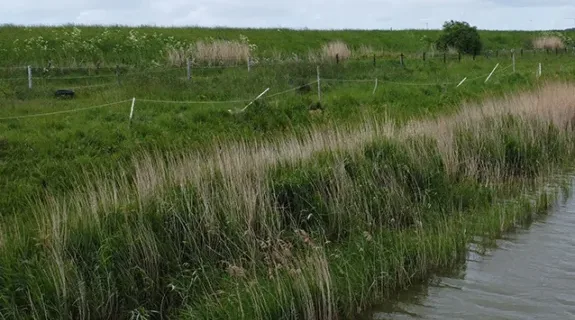
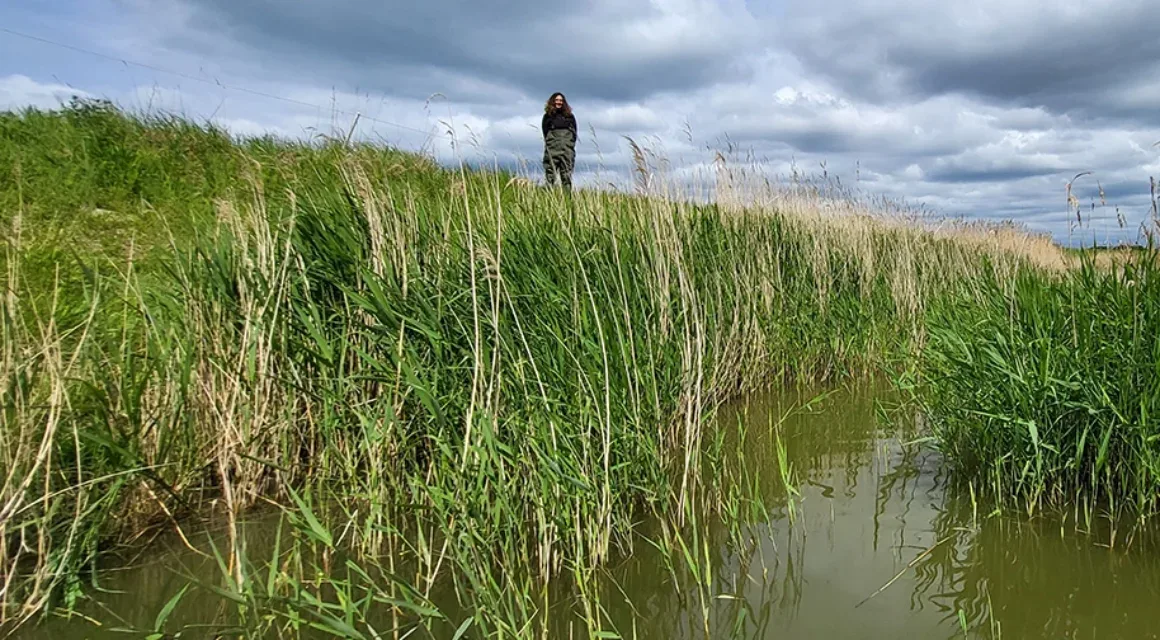
Within two months, reeds had already begun to grow out of the BESE-elements. After a year, the BESE-elements were no longer visible, replaced by fully grown riverbank vegetation. Reed growth was most apparent on parts of the riverbank in which reed canes were applied before the placement of BESE-elements.
Biodiversity hotspot
Besides reed, 22 different species of plants were found growing in and on the BESE-riverbank! Making the riverbank not only stable but also a biodiveristy hotspot for aquatic vegetation.
Nature based approach to riverbank restoration
Globally, plastic, concrete, and occasionally bitumen are employed to stabilize riverbanks. Aside from their ecological insignificance, these materials can pollute the environment, with plastic and bitumen posing risks of micropollution generation, detrimental to organisms.
The impact of micropollution on ecosystems often becomes evident only after significant damage has occurred. Remediation of polluted riverbanks is costly and requires rebuilding. A nature-based approach can prevent such damage, offering a sustainable solution to mitigate pollution and preserve riverbank integrity.
Results
- 44m Riverbank restored
- Erosion halted
- Biodiversity increase above and below water
- Water quality increase
- No future maintenance
- No plastic or polluting materials used