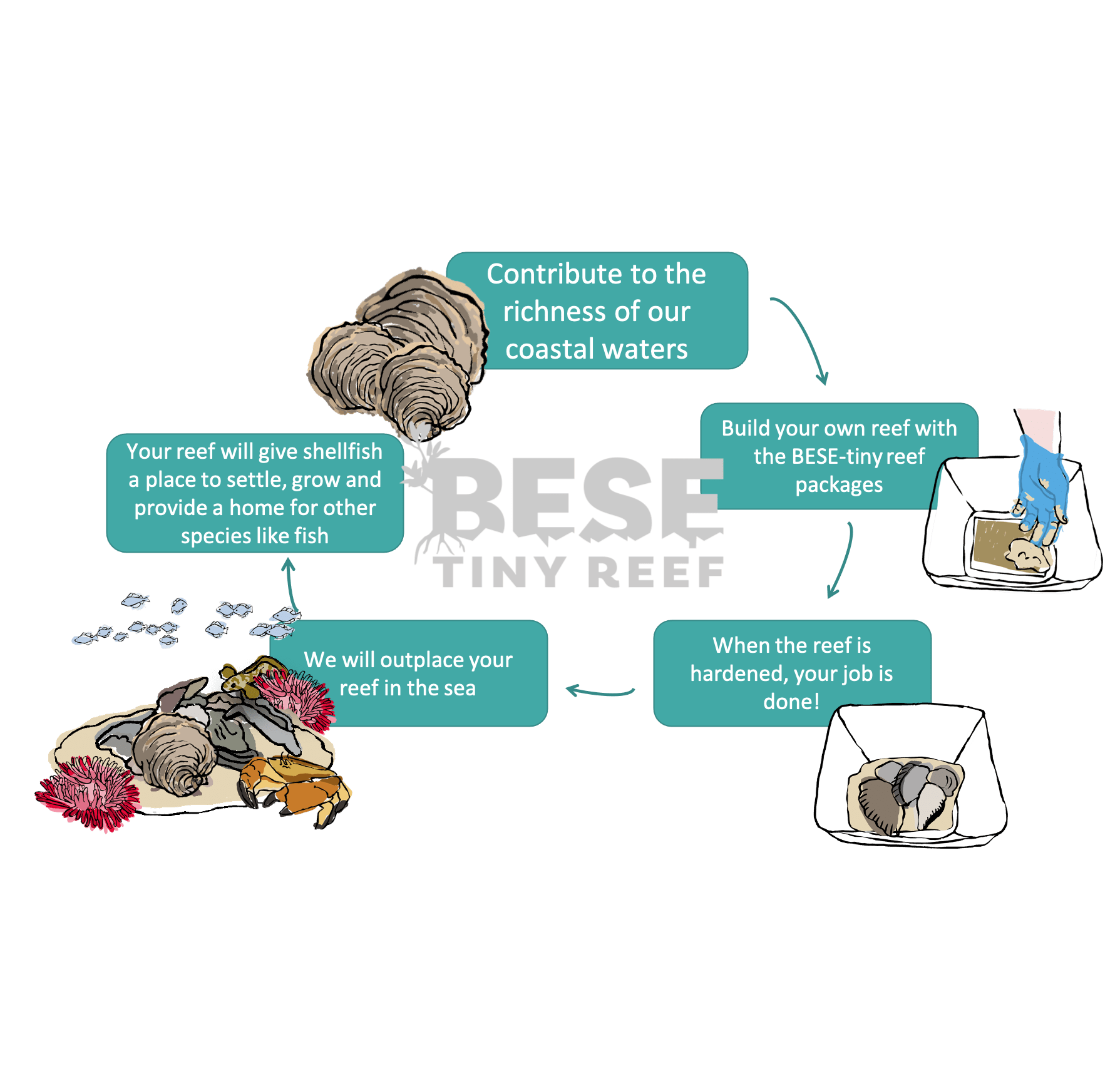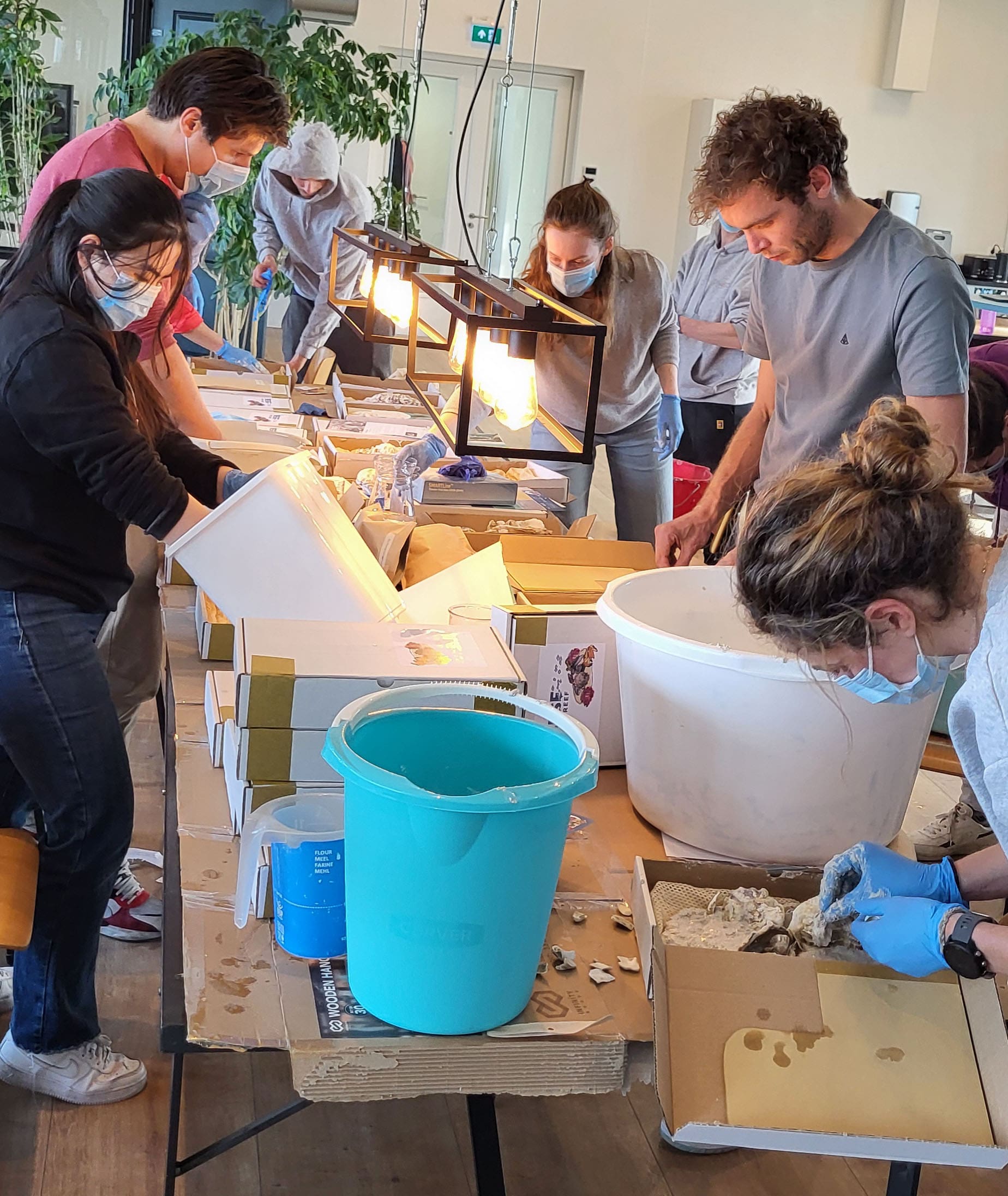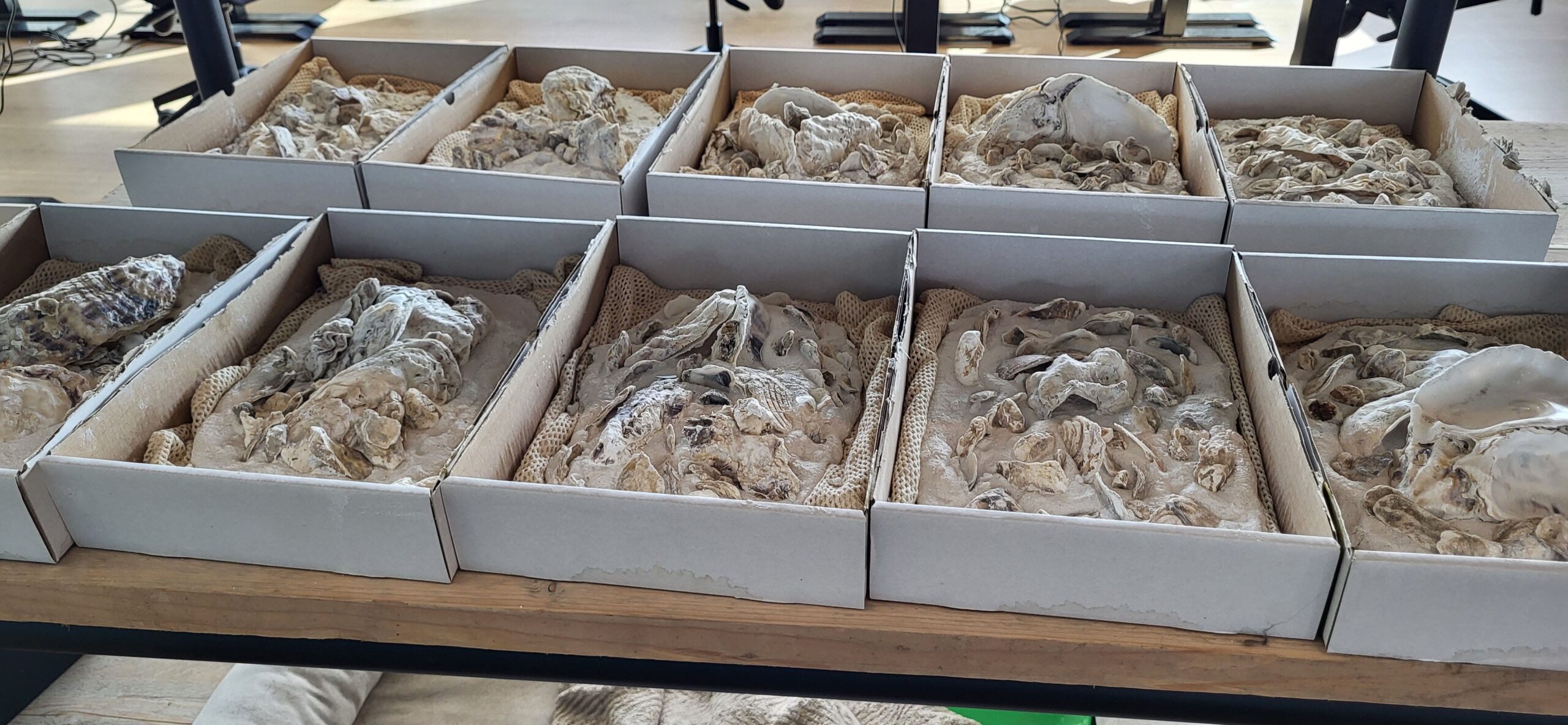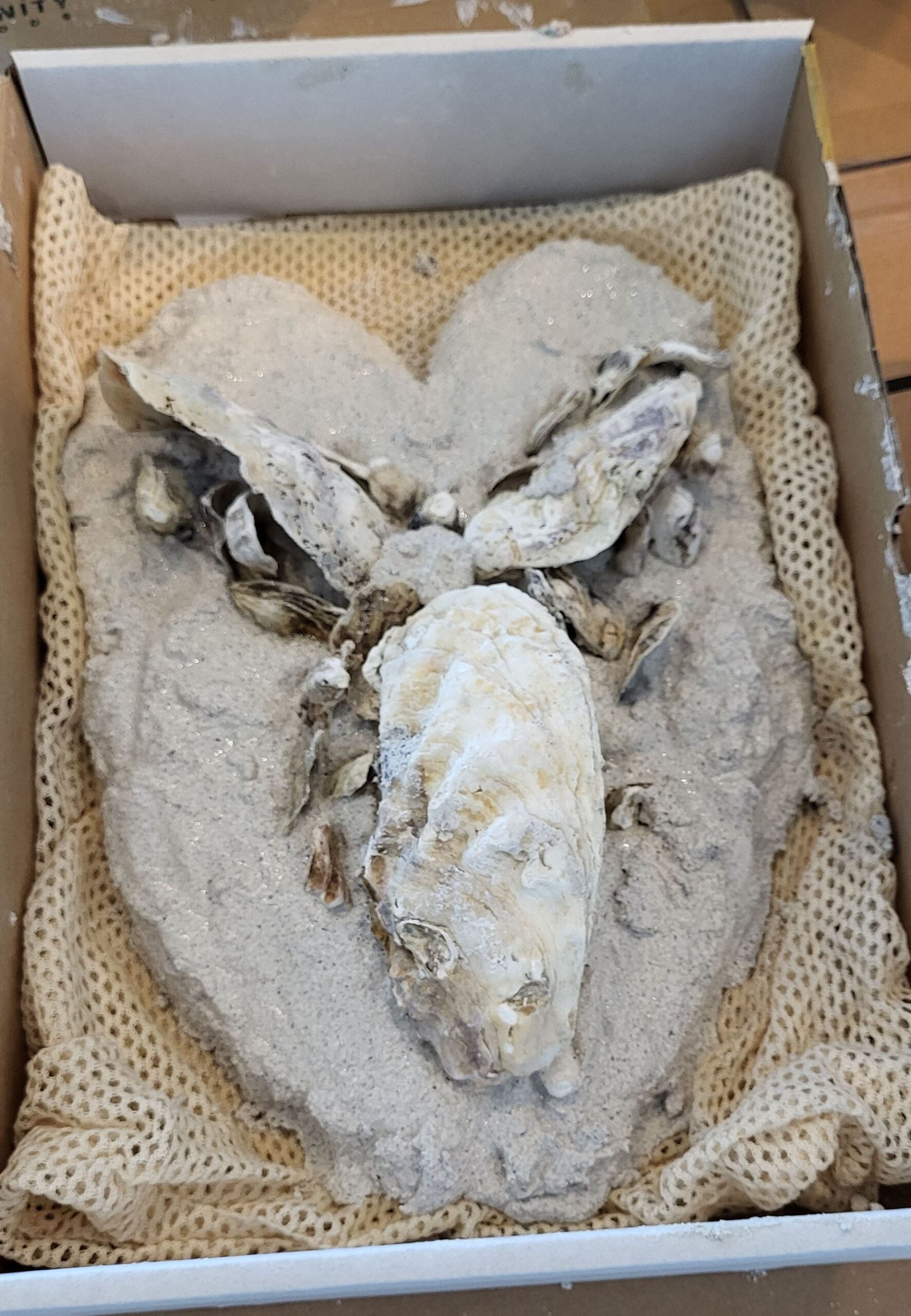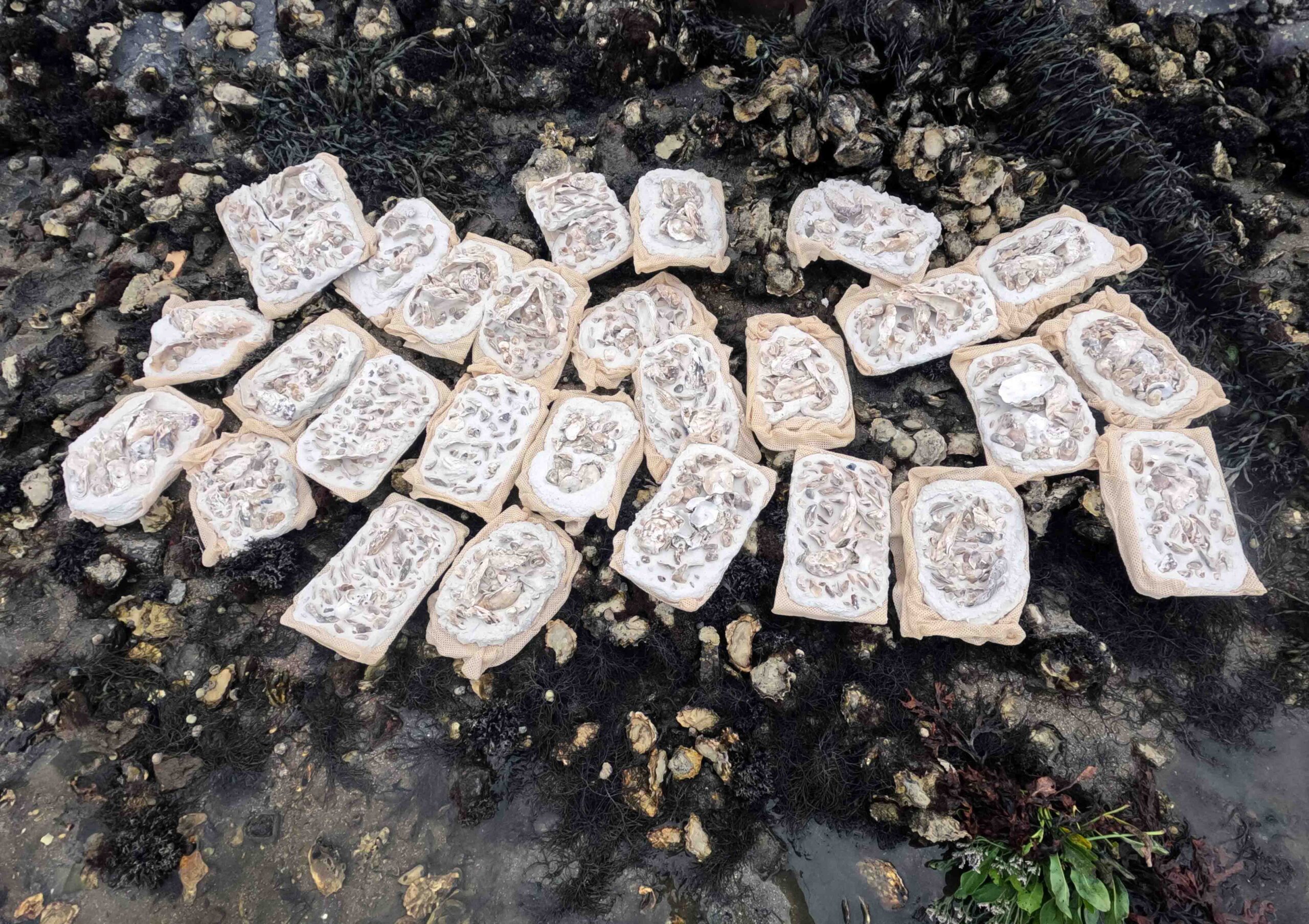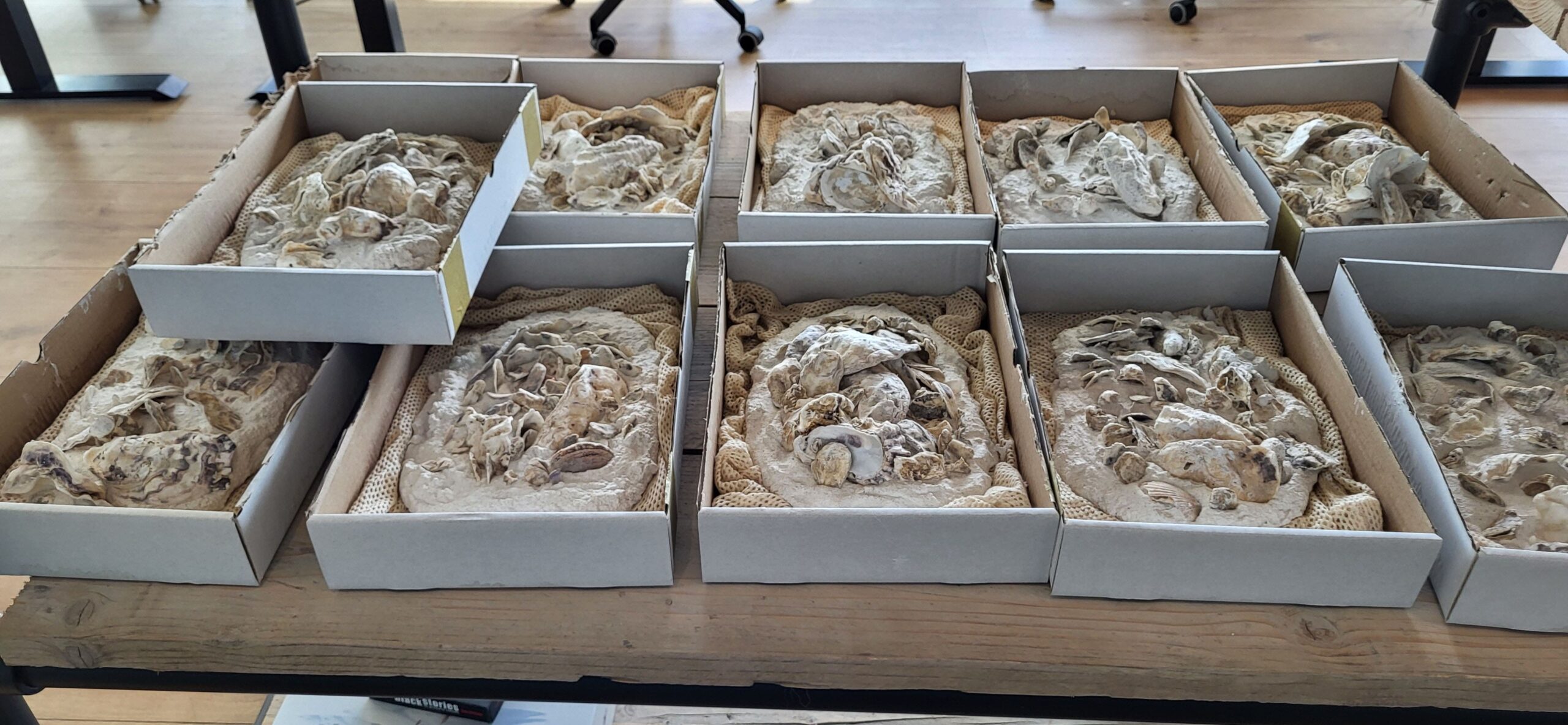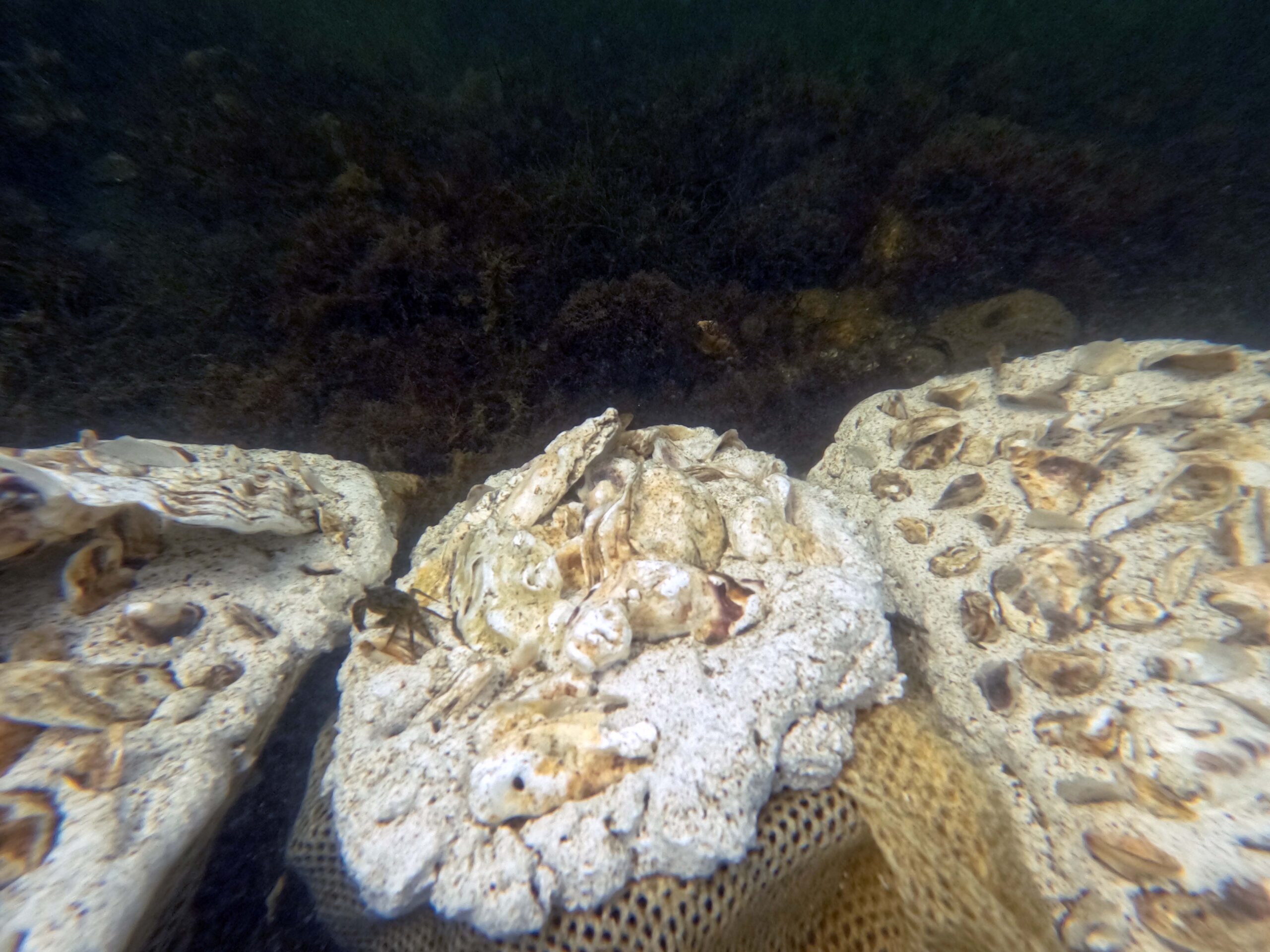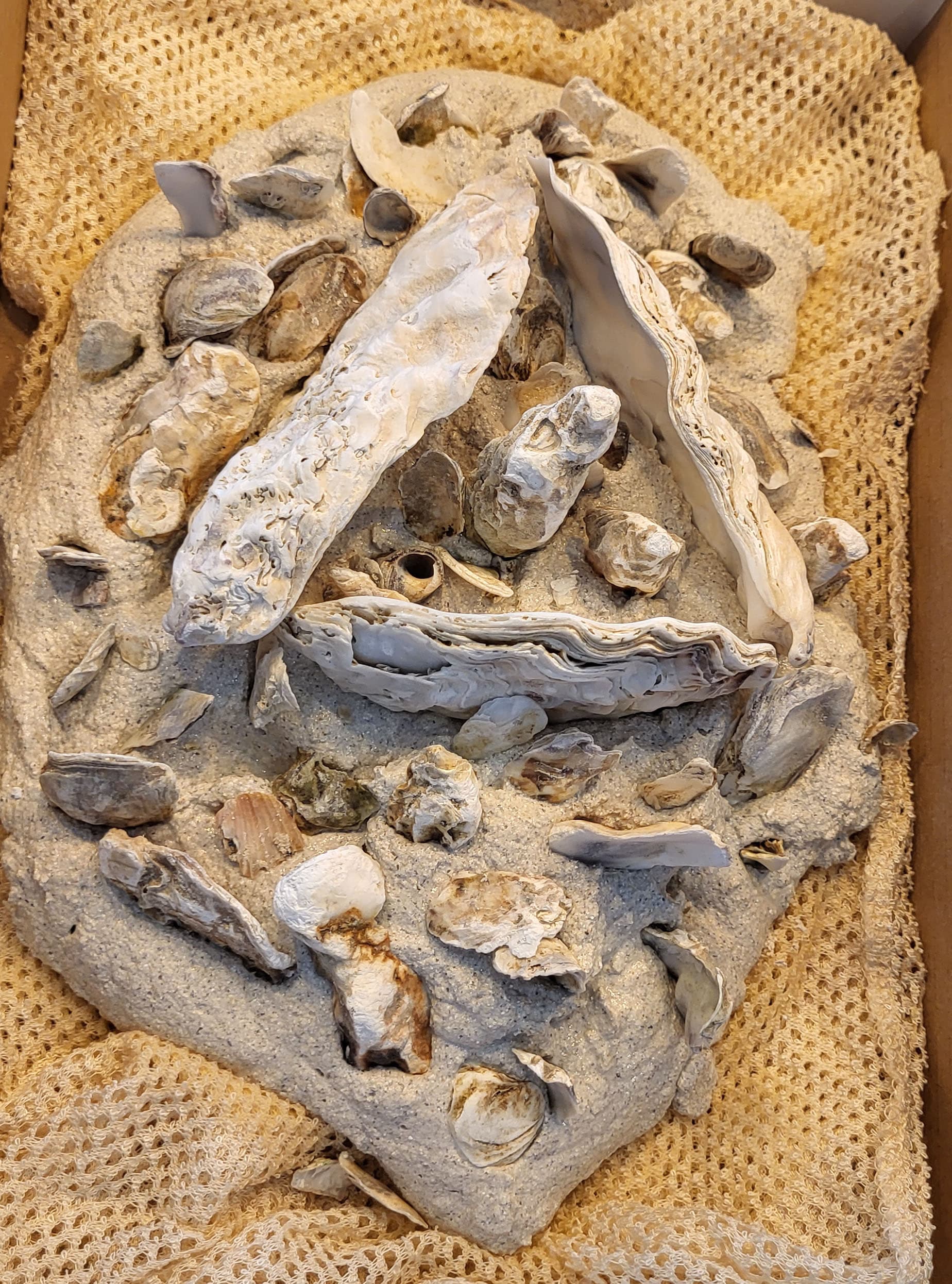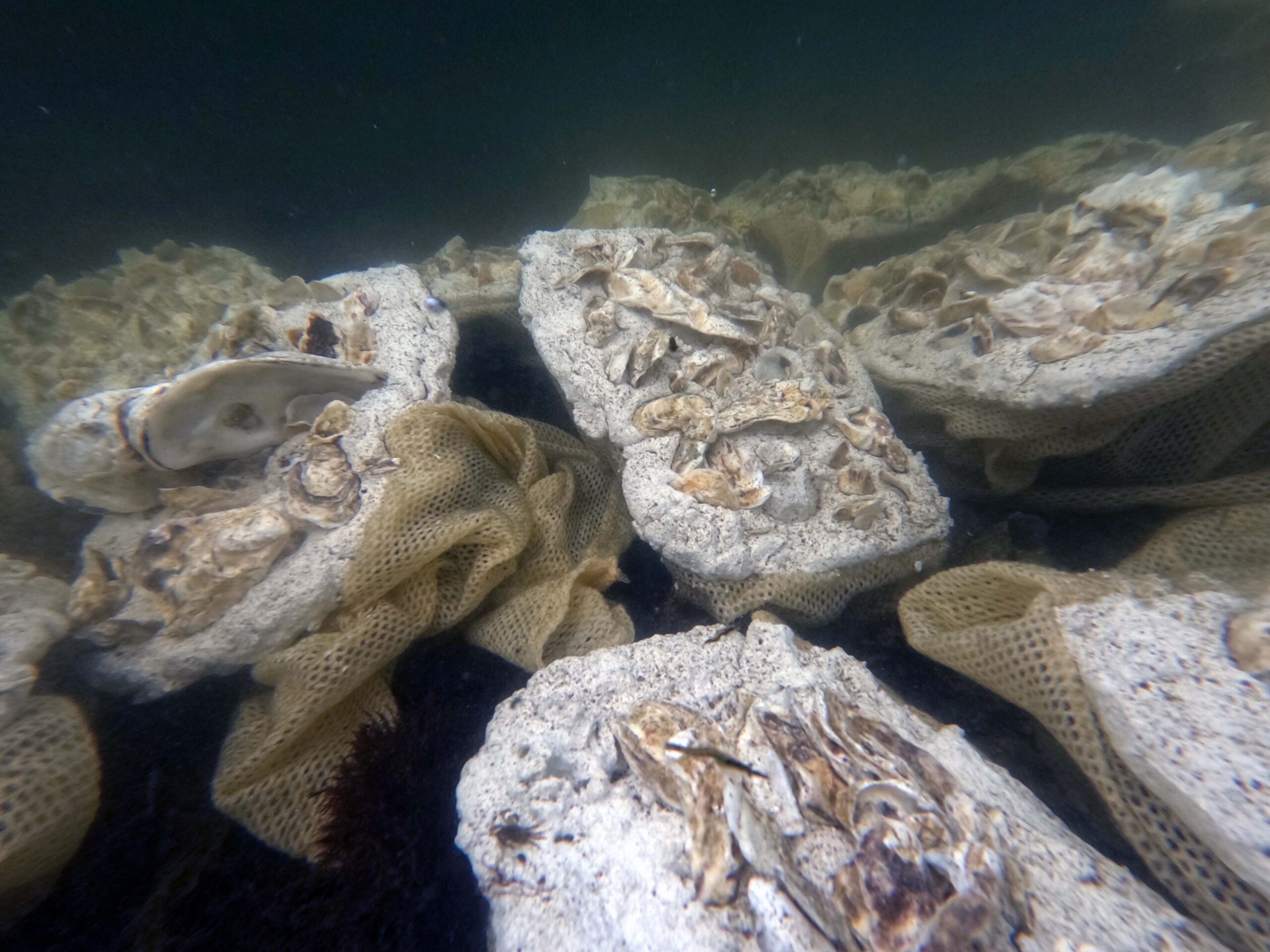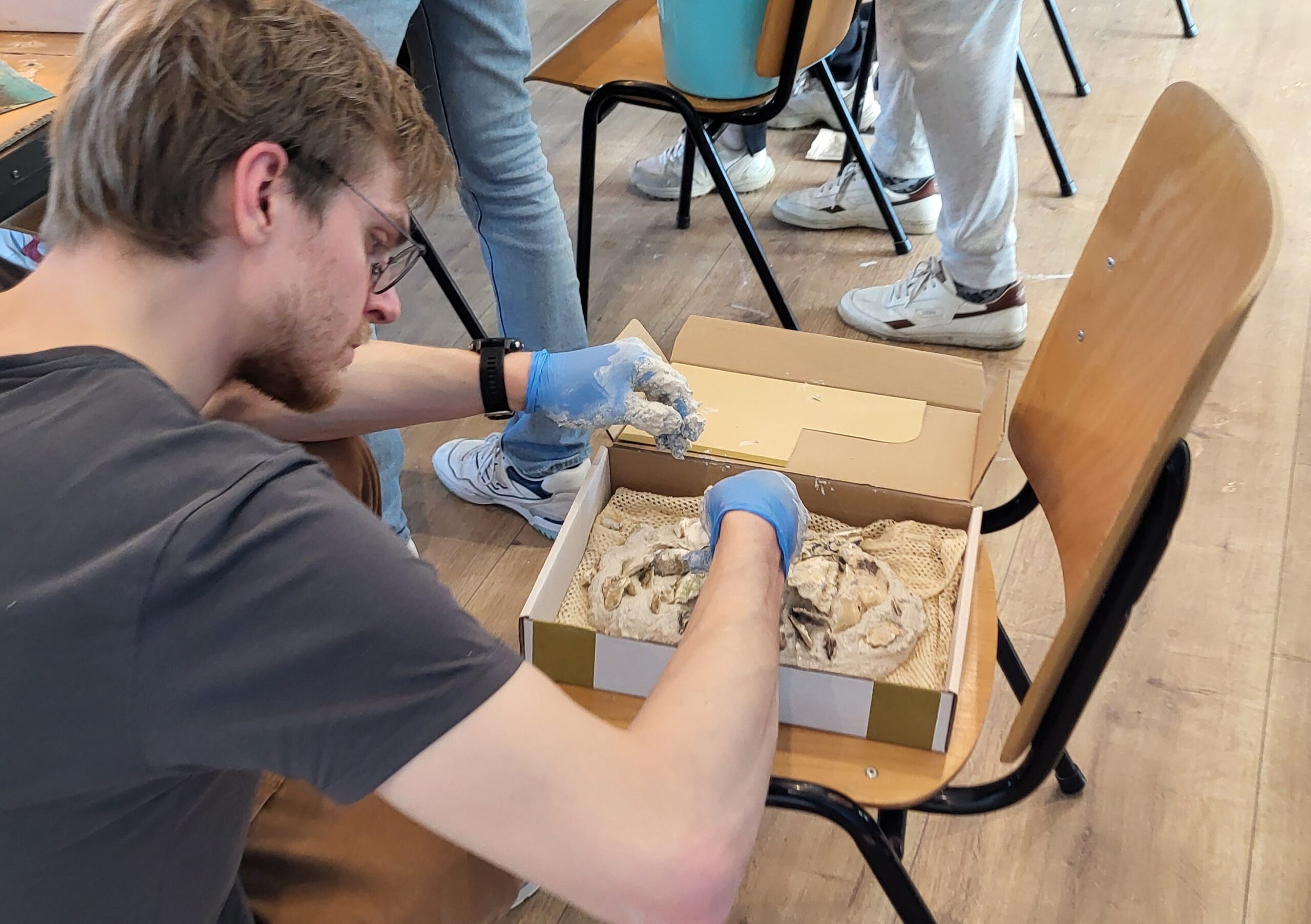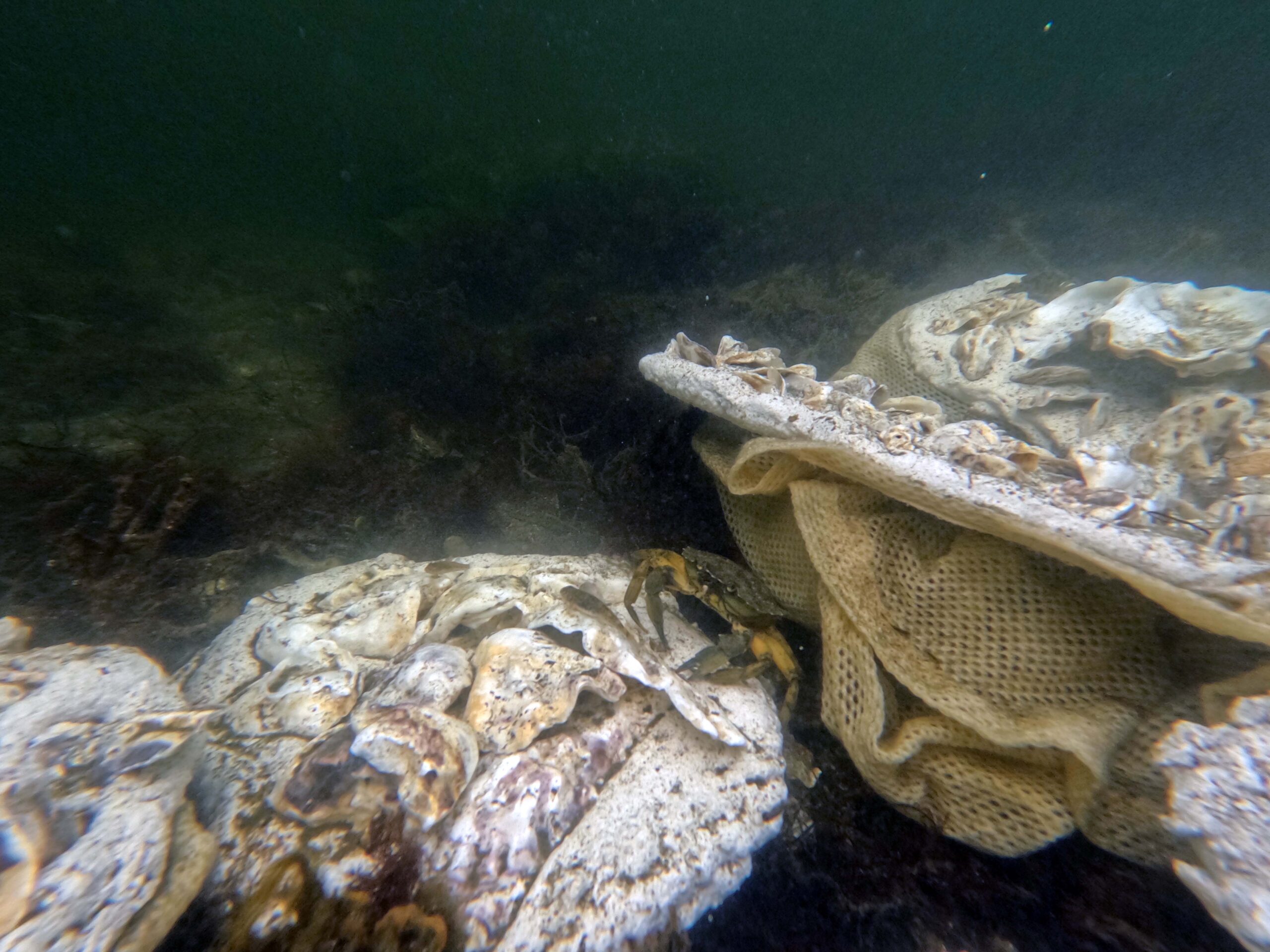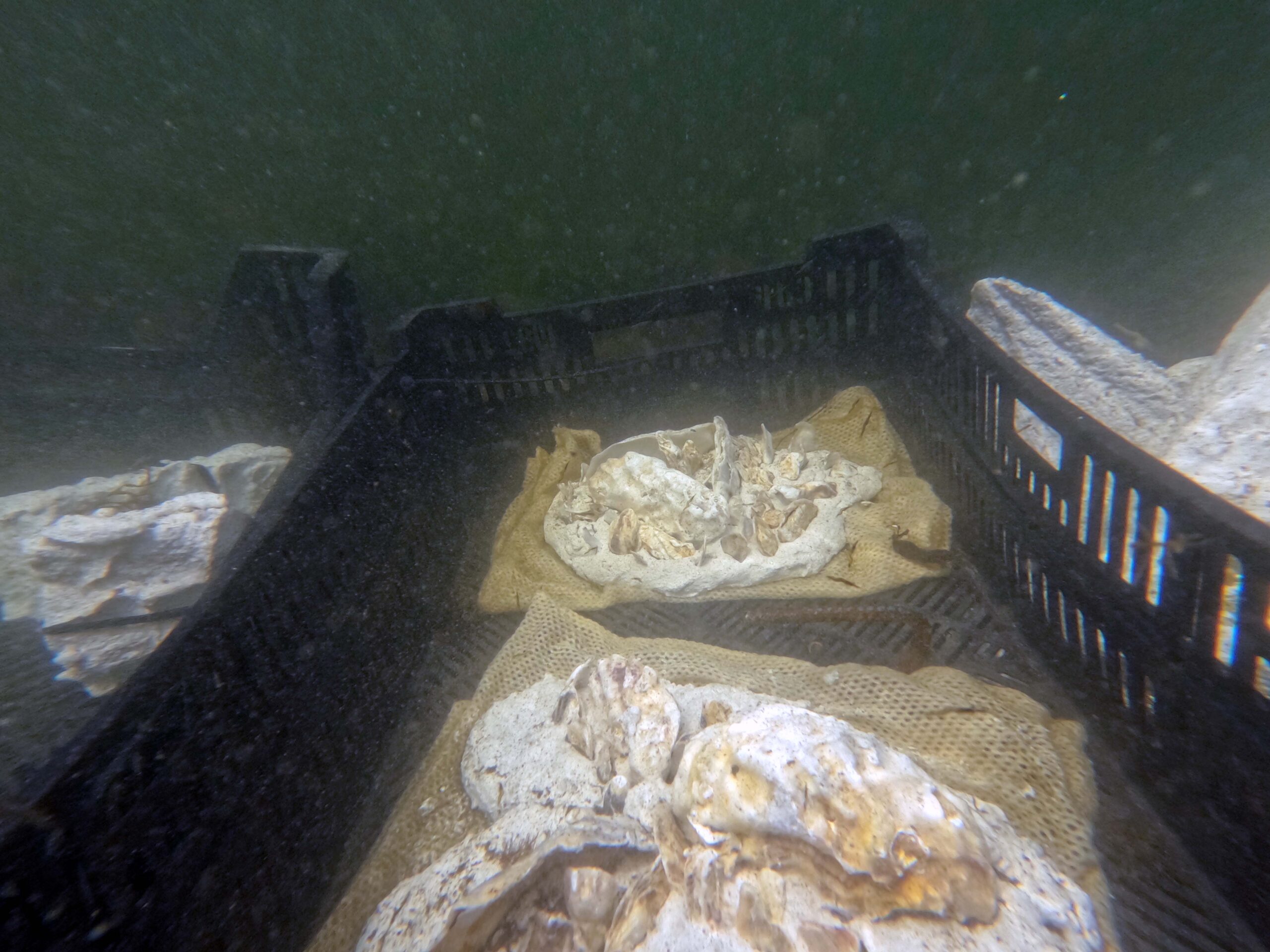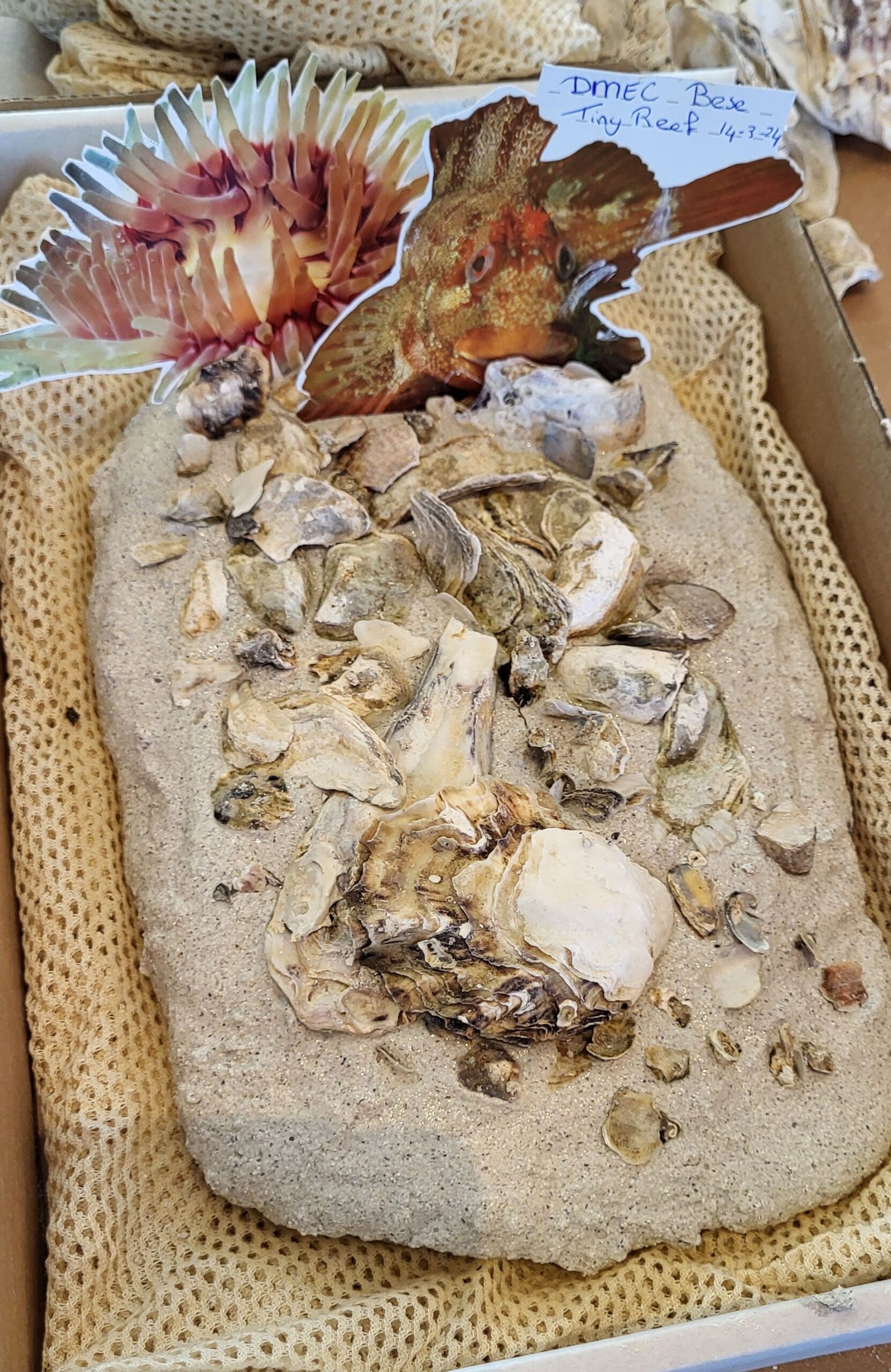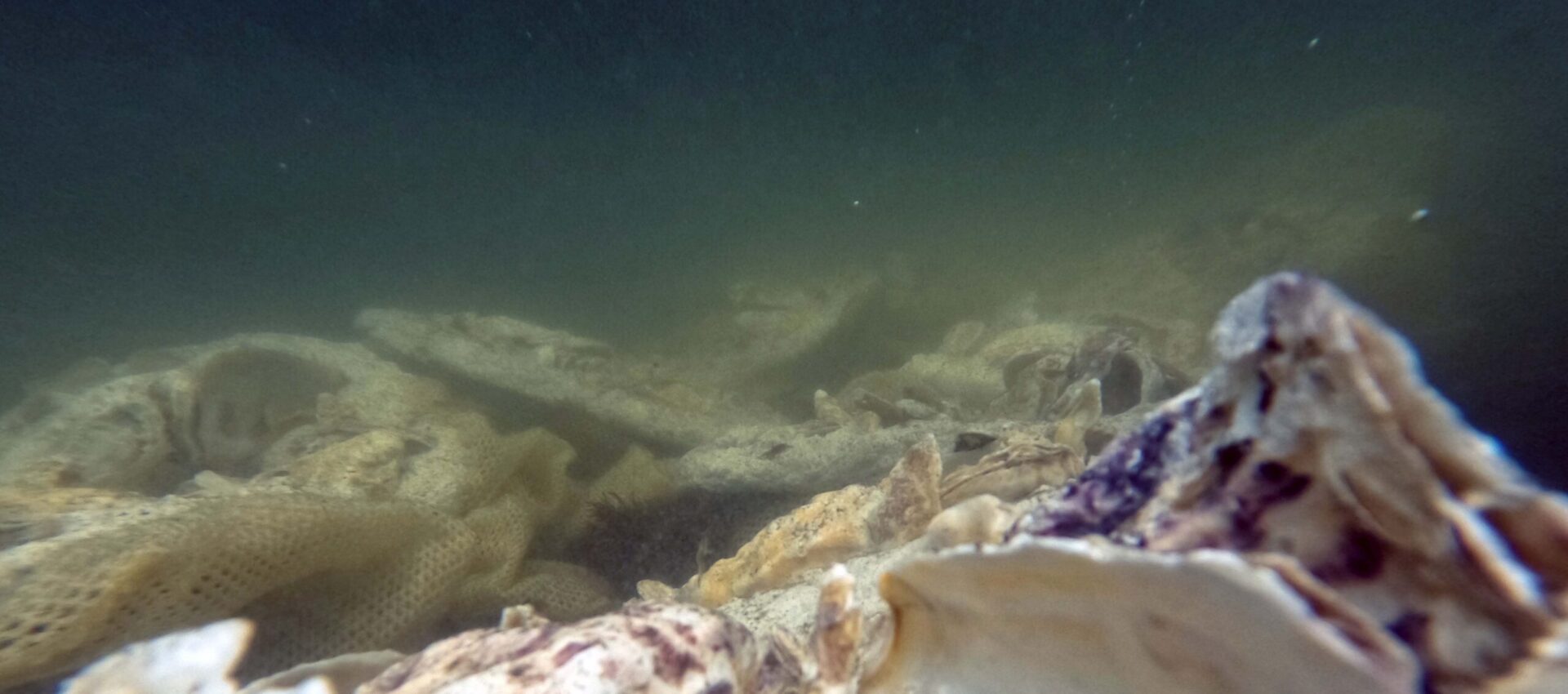

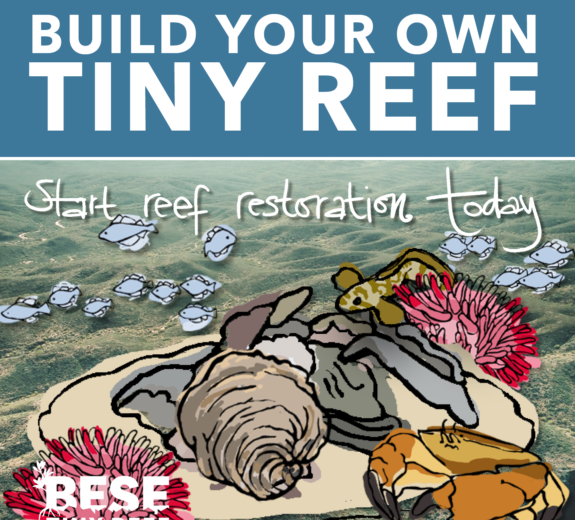
This product is a do-it-yourself set, which allows you to create your very own tiny reef, thereby helping in the restoration of oyster reefs! With this set you’ll create a small tile of substrate, which is perfect for oysters to settle upon. Once you have finished building your tiny reef we can place this in areas suitable for reef restoration. Your tiny reef will become a home for oysters, and together with the many other tiny reefs, will create a flourishing oyster reef!

Create a home for oysters
Everybody knows about the beautiful coral reefs of tropical seas, but reefs also occur in more temperate waters. These reefs are mainly formed by shellfish, like oysters. Shellfish reefs serve as nurseries and safe resting areas for numerous fish species. These reefs enhance biodiversity by providing a home for many animals and plants, as well as playing a vital role in improving water quality by acting as a filter!
By building this Tiny Reef, you’ll create an essential home for shellfish like oysters and mussels. After these species have settled, many other reef inhabitants will follow.
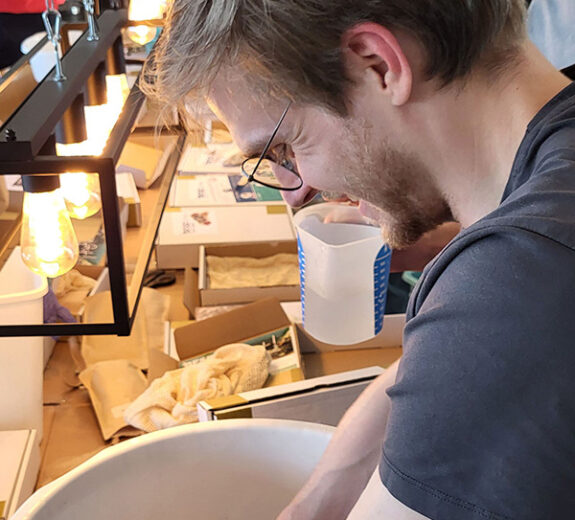
A fun and educational group activity!
Interested in a fun and educational activity with your colleagues, classmates, friends, or family? Build BESE-tiny reefs together! We will deliver the do-it-yourself sets ourselves and will give a presentation on why oyster reef restoration is so important. Together you can start building your own tiny reefs, which combined will form the larger reefs needed to restore the biodiversity in our seas. Enough reasons to use your creative skills and make a real contribution to ecosystem restoration!
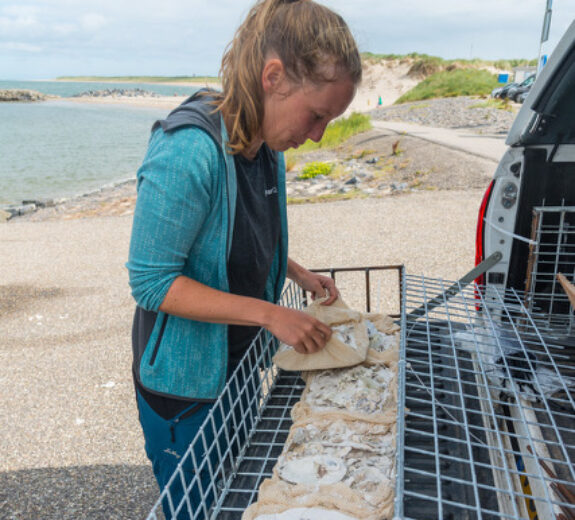
Placement of BESE-Tiny Reefs
When your tiny reef is ready to be placed in the environment, you can contact the BESE-team, who will place these tiny reefs in areas suited for oyster reef restoration. The tiny reefs will attract shellfish, like oyster larvae, that will settle and form a new reef.
Updates on these reefs will be shared on our website and social media channels.
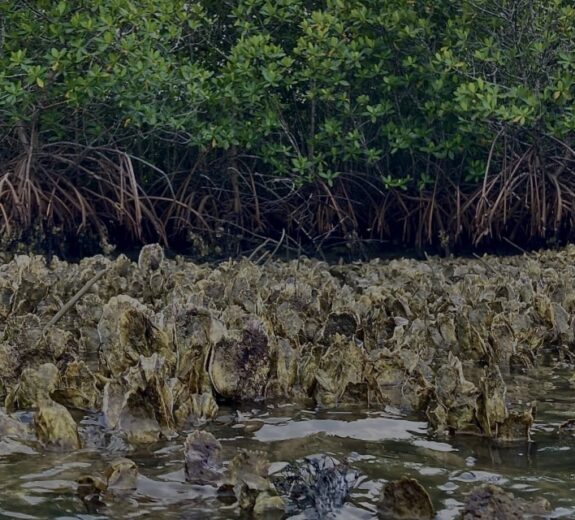
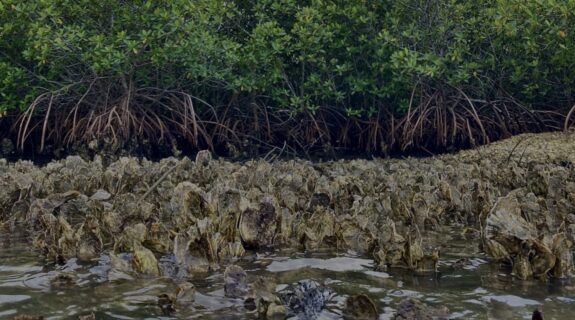
Around 85% of natural oyster reefs have been lost in last 140 years
Research has shown that an estimated 85% of oyster reefs have been lost sine 1883. A key driver for this decline was the intensification and industrialization of fisheries. For example, bottom trawling – a technique where large, heavy nets are dragged over the seabed – is very efficient for fisheries but at the same time it is very damaging to life on the seabed. On top of these anthropogenic factors, oyster populations have be under pressure from diseases.