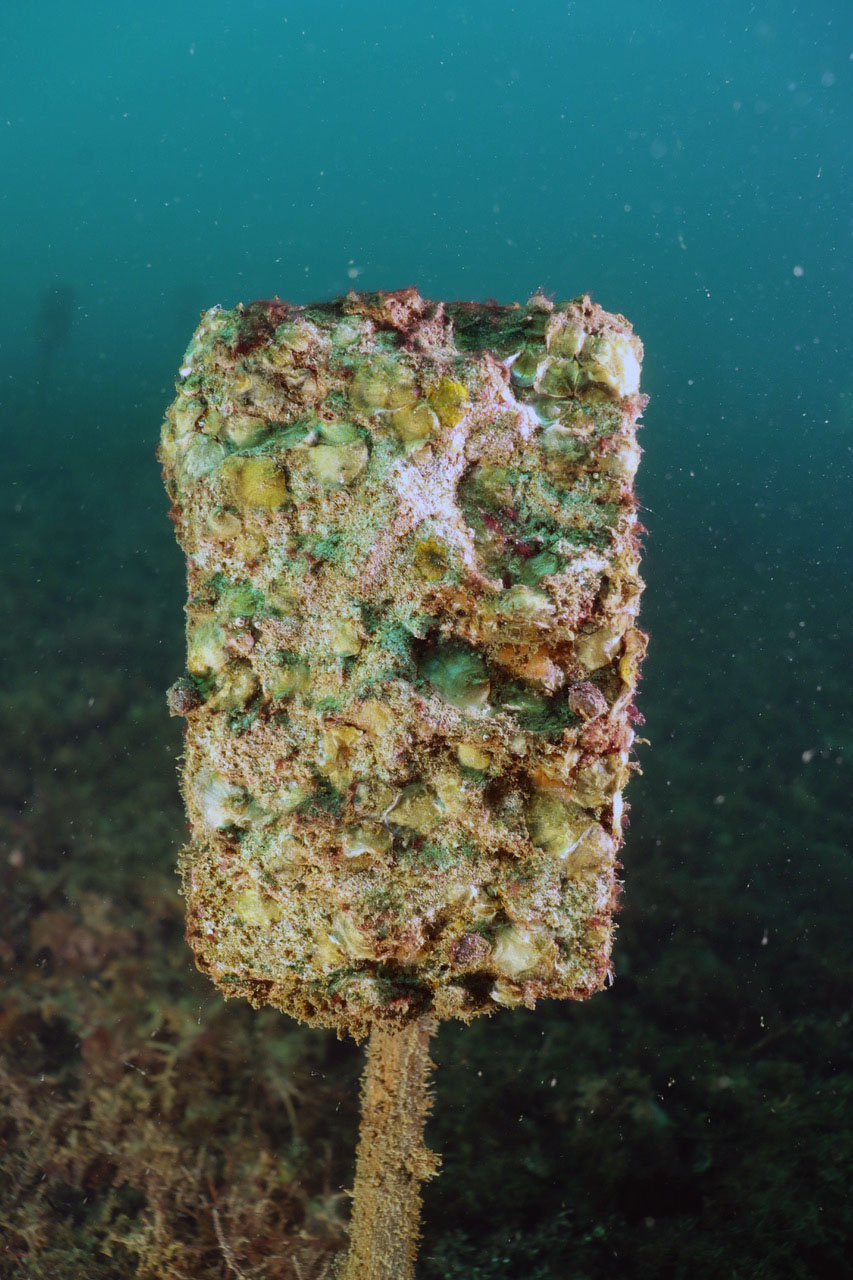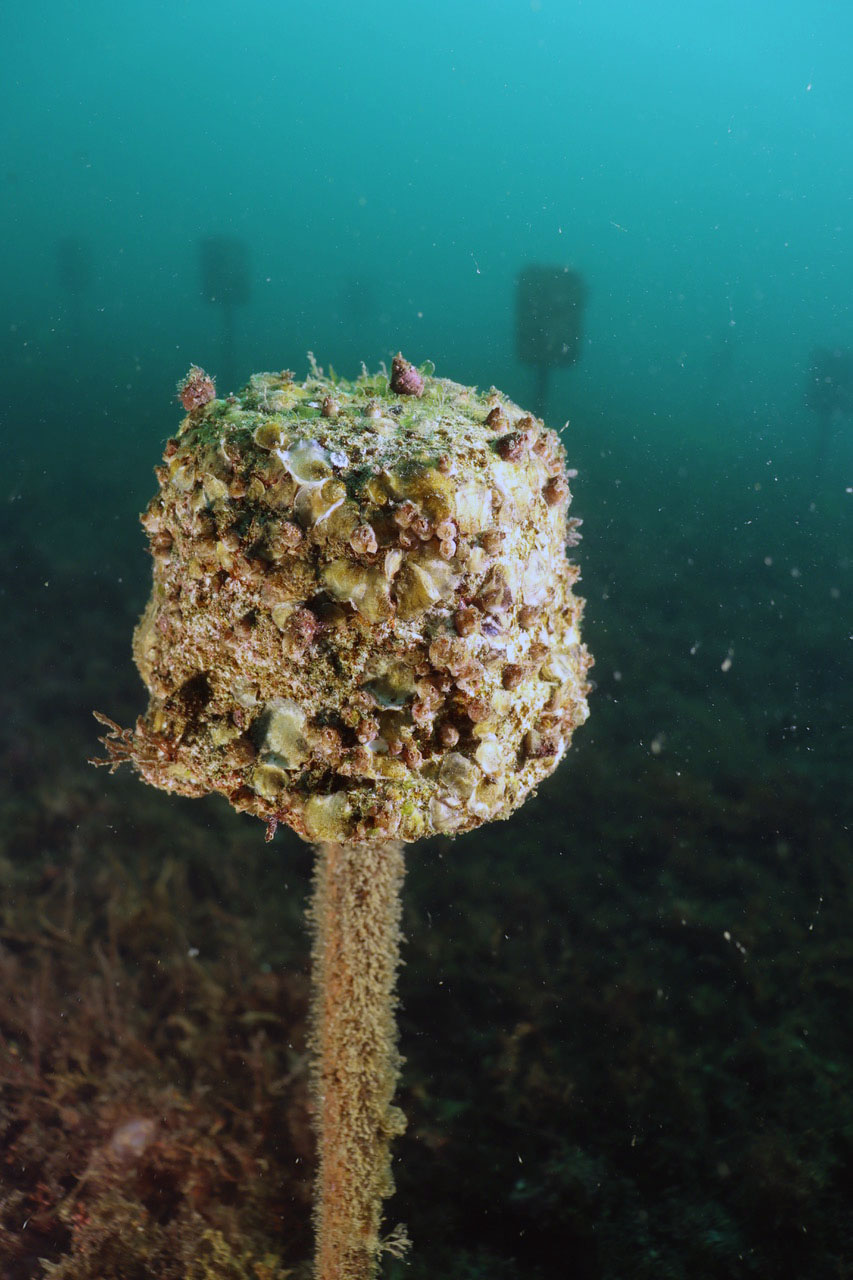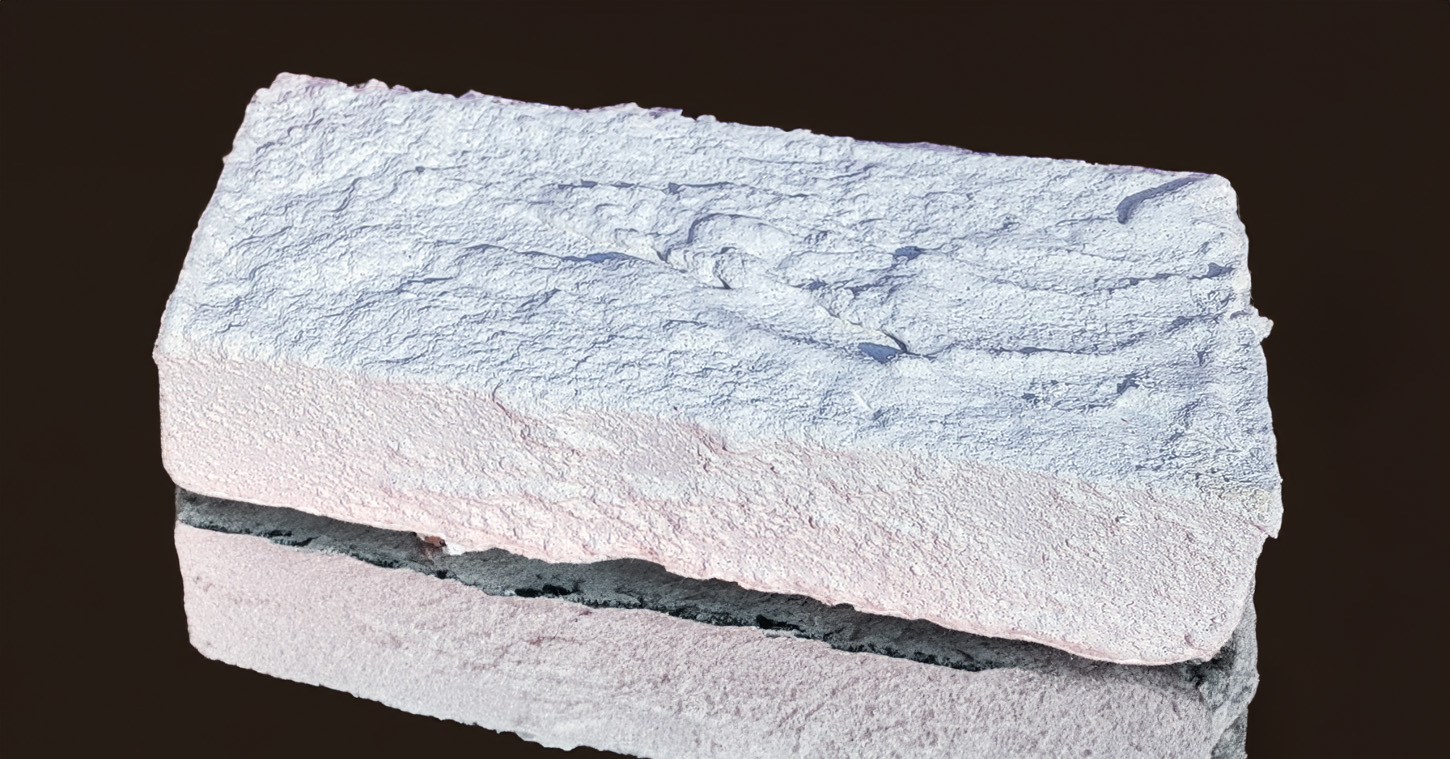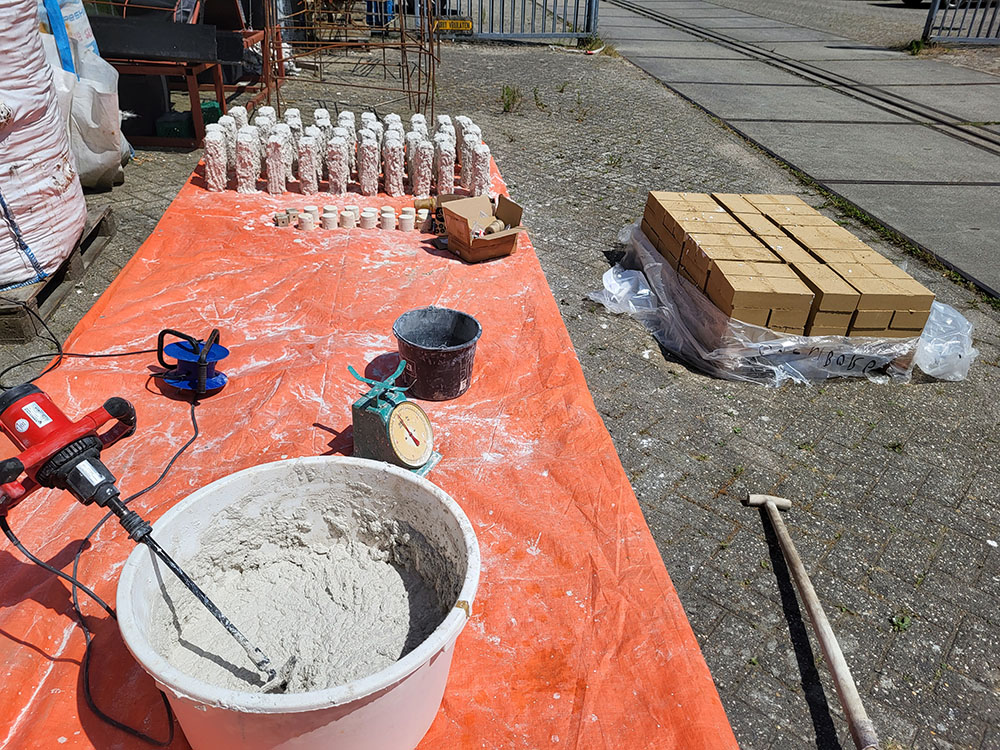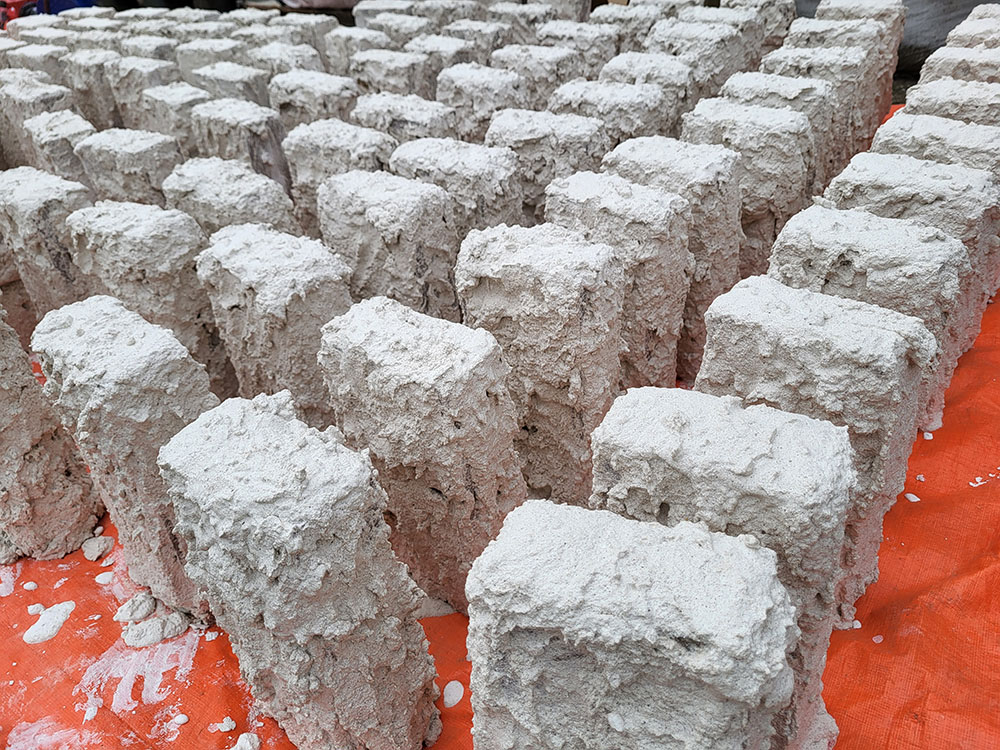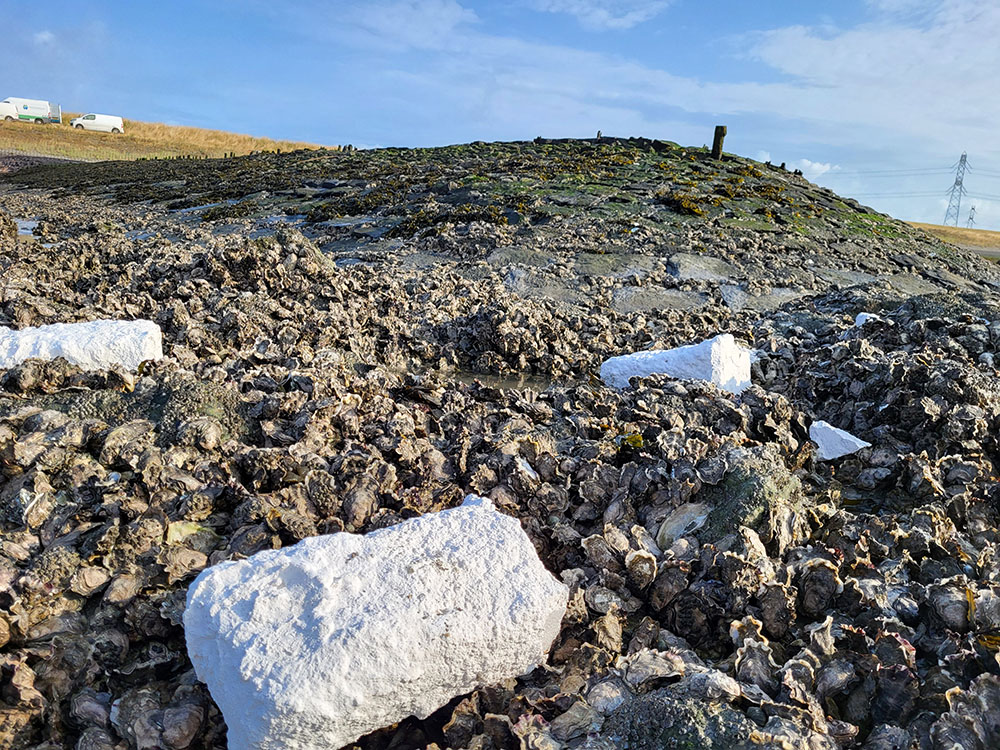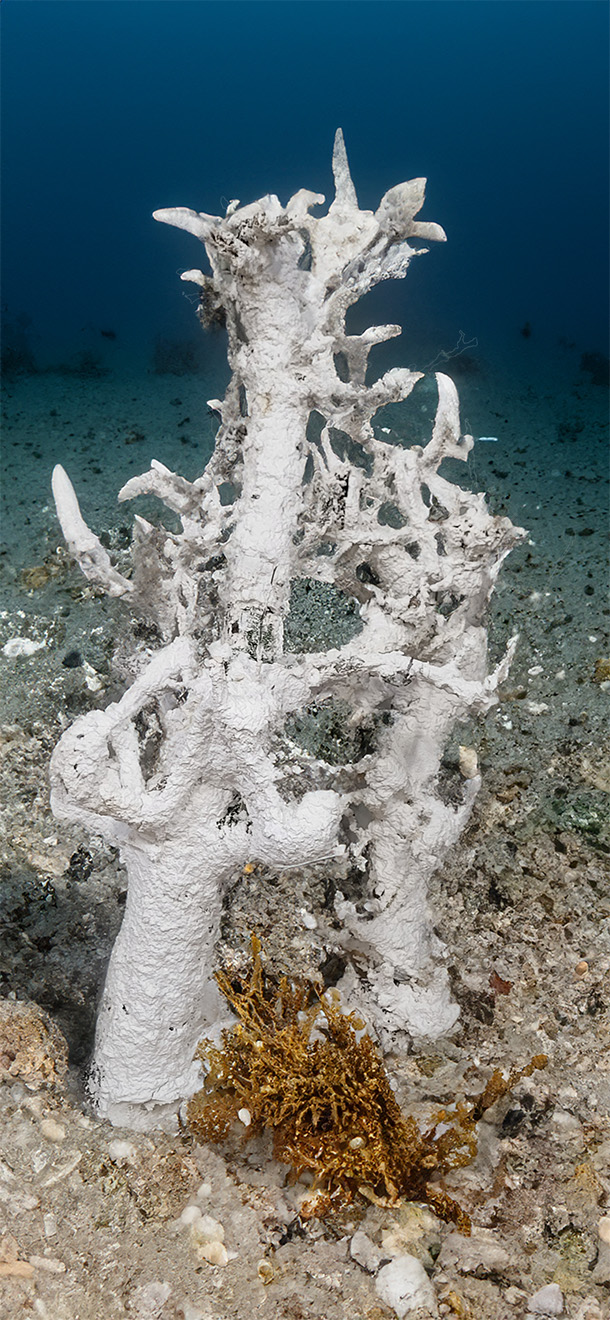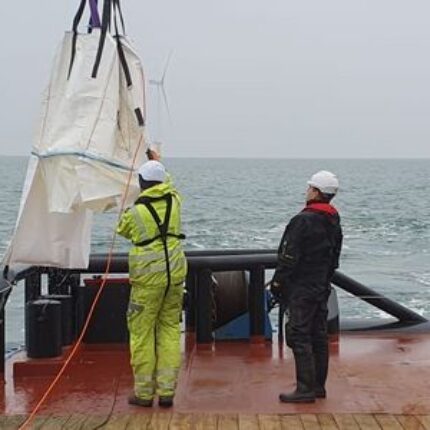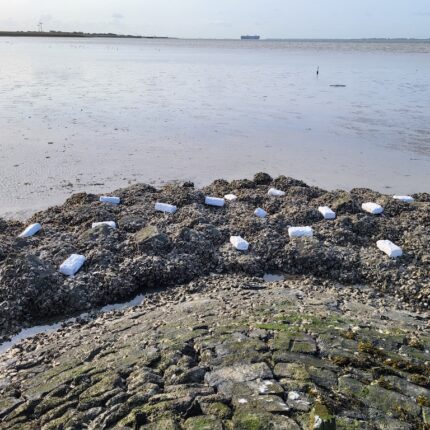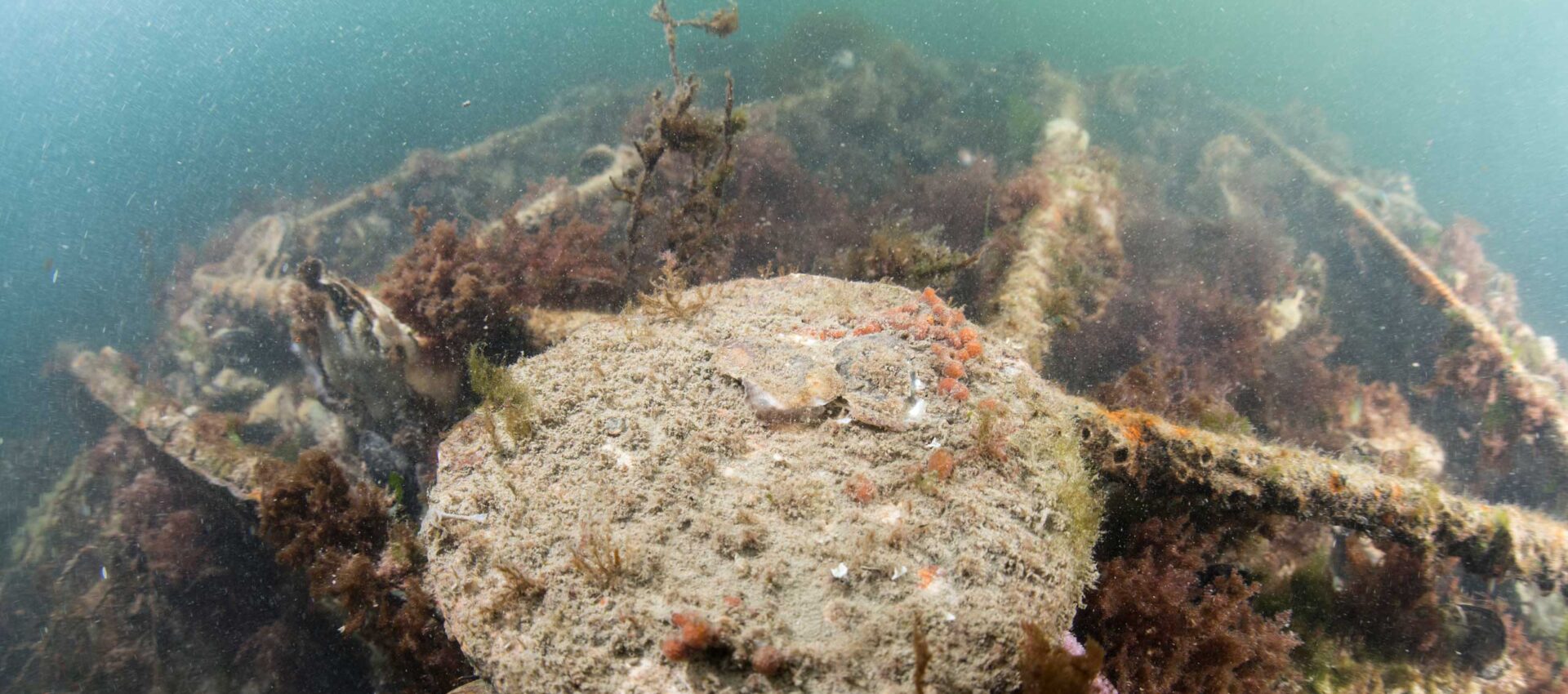

BESE-reef paste can be applied as a coating on a variety of materials and structures to create a more attractive surface area for oyster larvae settlement. Once oysters or other shellfish have colonized the structure, BESE-reef paste starts to dissolve, leaving only the natural system behind. BESE-reef paste is made from crushed waste shells (60-80%) and our proprietary natural binding agent (20-40%).


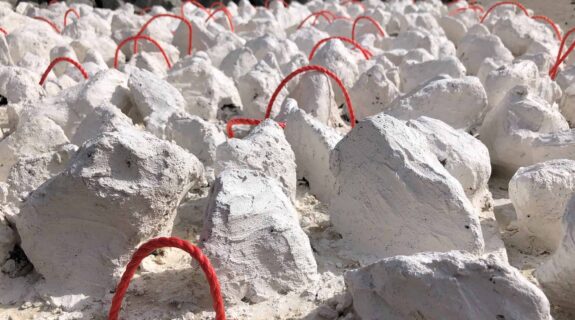
Oyster settlement substrate
The larvae of many shellfish species settle on other shells, which consist mainly of calcium carbonate. BESE-reef paste replaces natural shell material and increases shellfish recruitment rates. It is made from crushed oyster shells and a nature friendly binder. Which works best as a coating. This way any structure can receive a substrate suitable for oyster settlement. This is particularly beneficial in areas:
- where the amount of shell material is limited.
- too dynamic to place loose shells on the sea bed (those with a high chance of burial or movement).
- where you can coat artificial reefs used for ecosystem restoration.

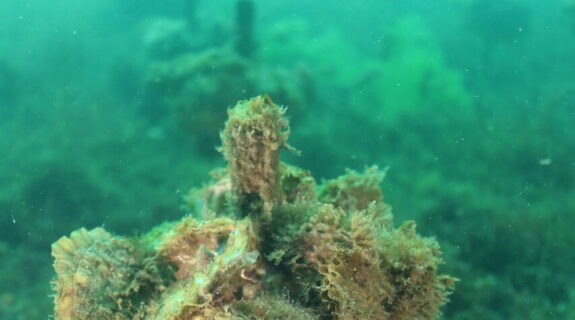
Developed to support native oysters
BESE-reef paste was developed as an ideal oyster settlement substrate, to aid the restoration of the European Flat Oyster (Ostrea edulis), a species that is very selective in the type of surface they choose for settlement. By using crushed flat oyster shells in our BESE-reef paste, we are able to mimic a natural reef, thereby creating the most suitable surface for flat oysters. BESE-reef paste has been specifically developed for the European flat oyster, for other species of oysters we advise using crushed shells of the species in question. For more information contact us.

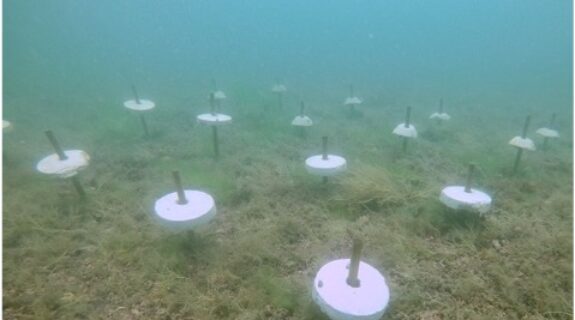
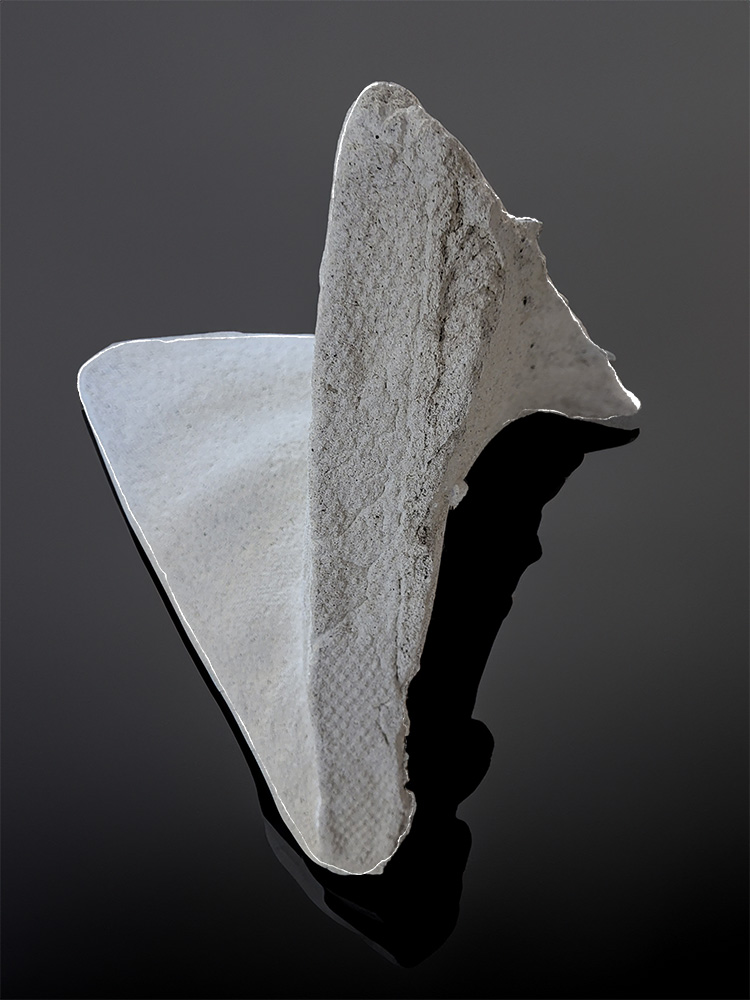
BESE-reef paste moulded into hard substrates and corals
We also design moulds to cast BESE-reef paste into various structures for specific restoration projects. These moulds are specifically designed for optimal curing of the 100% BESE-reef paste structures. These structures can be used to create entire artificial reefs, and we are currently developing a paste specifically for coral reef restoration. Which would make surfaces more attractive for coral larvae and CCA settlement. Field testing is ongoing, we already see much more organisms settling on the BESE-reef paste than on concrete structure. Stay tuned for updates.
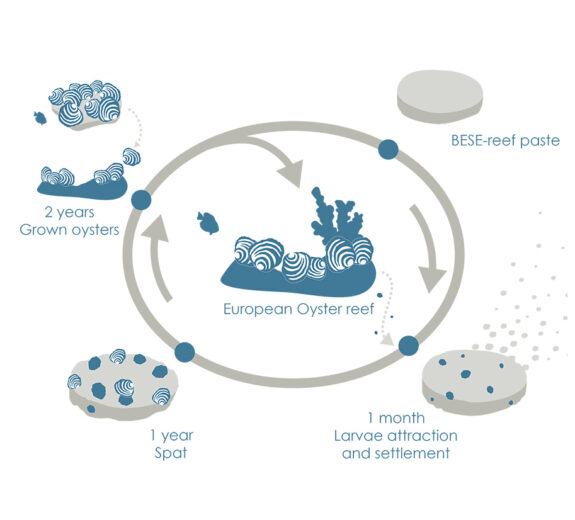
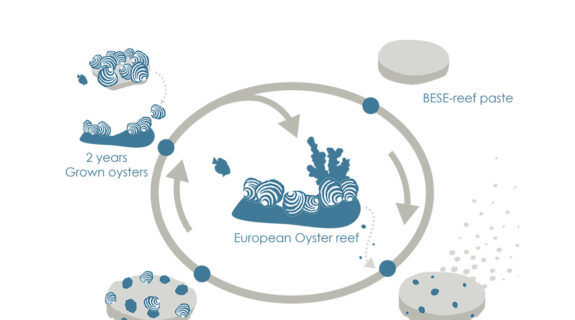
Oyster larvae attraction thanks to eroding property
Oyster larvae are attracted to the reef paste as it releases the right settlement cues. After settlement, the oysters can grow as the paste slowly degrades (1-5 years). Leaving only a restored reef behind.
BESE-tiny reef
Want to add an educational aspect to oyster reef restoration? Our BESE-tiny reef offer a do it yourself package to create a small reef based on the BESE-reef paste. For more information visit our BESE-tiny reef page.
Scientific article about European flat oyster restoration with BESE-reef paste
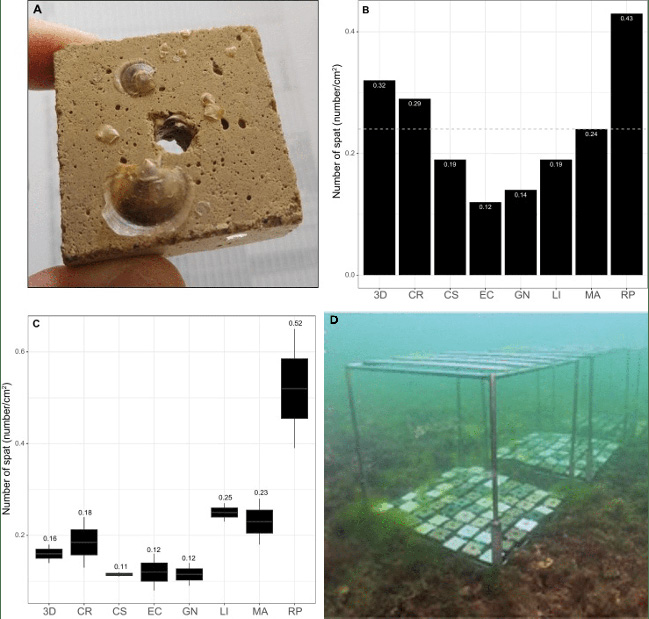
BESE-reef paste has proven to be one of the most effective substrates for European oyster settlement, boasting high settlement rates. This finding is highlighted in the recent scientific publication ‘Novel Settlement Substrates for European Flat Oyster (Ostrea edulis) Restoration’ by Kamermans et al. (2025).
A study led by Pauline Kamermans from Wageningen University explored various substrates for flat oyster settlement. Both laboratory and field experiments were conducted to test the settlement preferences of European flat oysters across 11 different substrates. You can read the full paper in Ecological Engineering.
The research was part of the North Sea ReViFES and REEFOREST projects in the Netherlands and France. BESE-reef paste stands out not only for its high settlement rates but also for its use of 80% recycled shells and its low carbon footprint.
These findings are particularly relevant for future designs of marine infrastructure. The differences in oyster settlement between conventional rock for scour protections, alternative calcareous rock for scour protections, conventional settlement add-ons, and eco-friendly settlement add-ons offer valuable insights for offshore wind farm designers, restoration practitioners, and port authorities.