


A popular feeding ground for birds was stabilized using BESE-elements to enhance the abundance of infauna species like worms and shellfish, which are vital food sources for bird species. Additionally, biodegradable artificial reefs were strategically deployed to facilitate oyster larvae settlement, promoting the growth of oyster populations and further enriching the ecosystem.
About this project


During a jetty construction project, contractors sought ways to enhance on-site nature. Two designs were implemented in 2023: BESE-elements to support sludge-dwelling animals and improve bird feeding areas, and artificial reefs to encourage the growth of oyster populations. These initiatives demonstrate a commitment to environmental stewardship and biodiversity conservation in construction practices.
Applied ecosystem
- Oyster reef
- Infauna (sof sediment species)
Products used
Results achieved
- To be updated in 2025 when monitoring data is retrieved
Project partners


Soft sediment ecosystem restoration

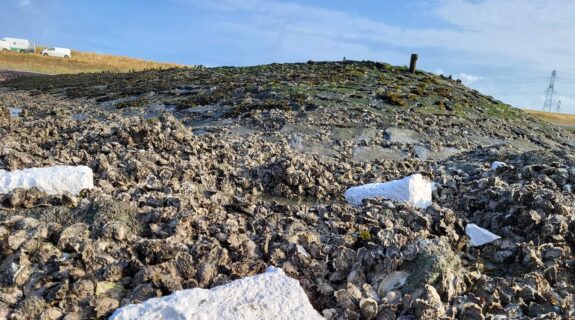
Oyster reef restoration
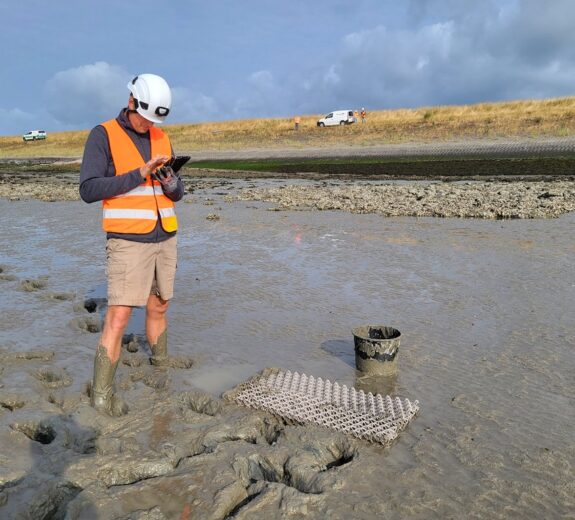
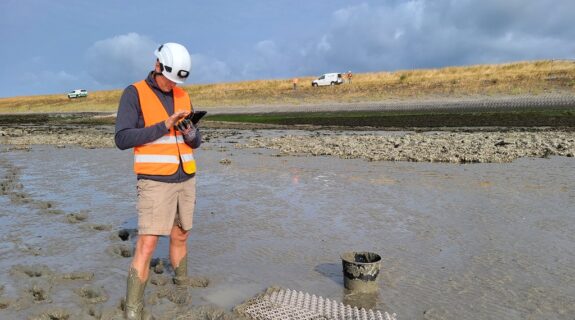
Extensive monitoring
BESE-elements were strategically positioned both within the mud and on top of it. Samples were collected from these locations, as well as from control areas, to assess whether the presence of BESE-elements enhances life on the mudflat.
Also, data was collected and pictures were made before and after the BESE-reef paste bricks were placed. With these results we can accurately report the findings and benefits for nature.
Mitigating negative effects of construction project
Mitigating the negative effects of construction projects or even achieving biodiversity gains is increasingly becoming the new standard. However, many companies and organizations face ecological knowledge gaps, leading to (partly) failed restoration projects. Unfortunately, the lessons learned from these failures often go unpublished, resulting in lost knowledge. This perpetuates a cycle where subsequent companies or organizations attempt similar approaches with similar negative outcomes.
This is where BESE comes in. Leveraging our extensive ecological knowledge and ecosystem restoration experience, we understand how and where ecosystems can be best restored. Our ecosystem restoration tailored products further enhance restoration success. These products, made from biobased, biodegradable materials derived from waste streams, align perfectly with the circular economy. By utilizing materials at the end of their life cycle to give back to nature, we ensure sustainable and effective restoration practices.
Results
- To be updated in 2025