


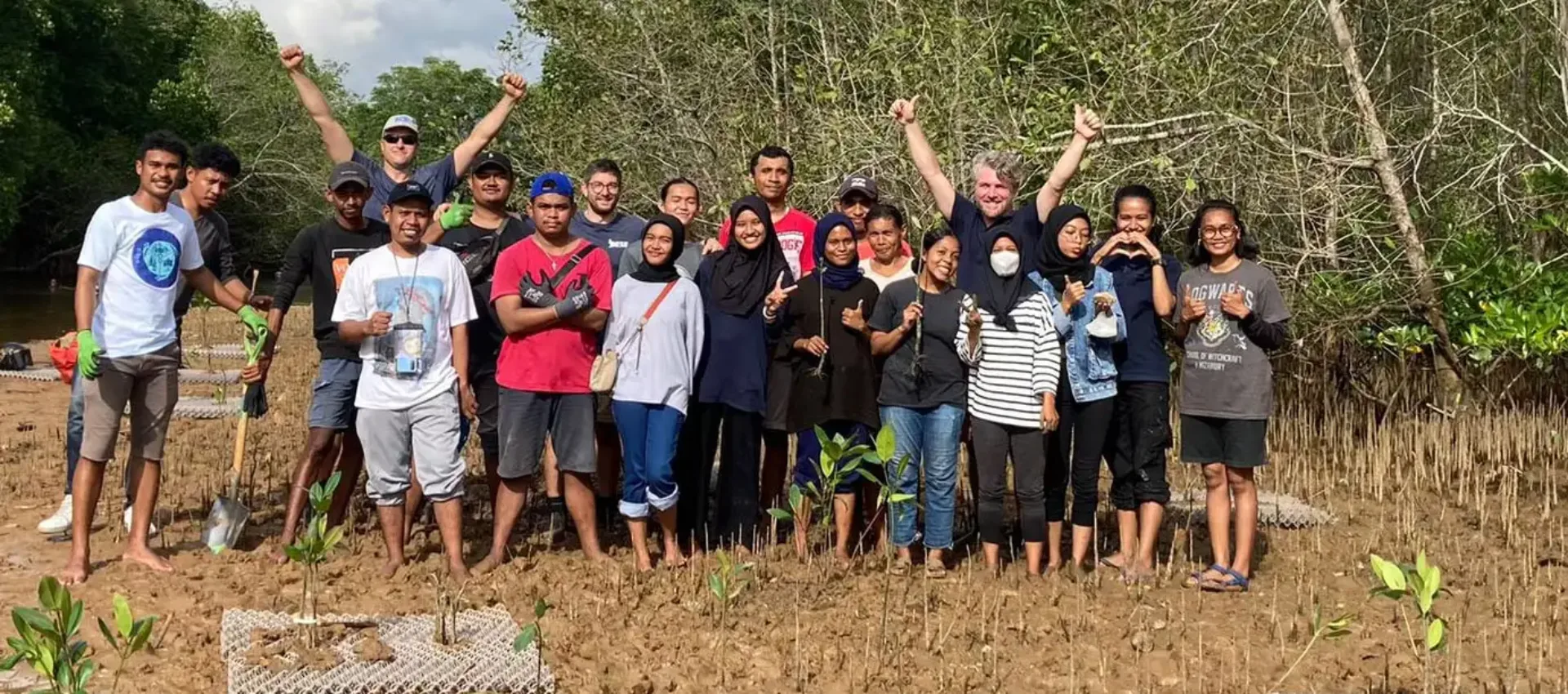

We empowered students from Pattimura University in mangrove and coral reef restoration initiatives.
Mangrove restoration efforts are underway at three distinct locations.
Mangrove restoration Ambon, Indonesia

With conventional mangrove restoration methods 0,5% to 1% of the planted mangrove seedlings survive.
By using biodegradable BESE-elements, which mimic the roots of mangroves we intend to increase these odds.
Three locations were identified for mangrove restoration, a high risk location (Ambon city), a medium risk (Waai) and a low risk (Passo) location.
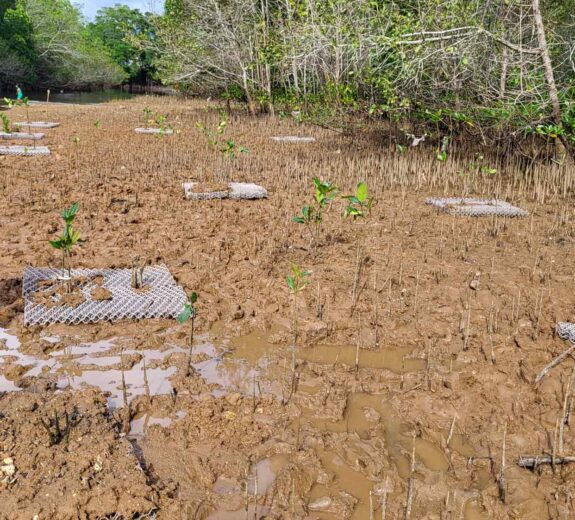
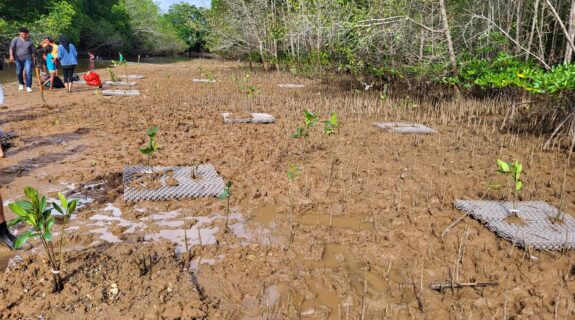
At all of these locations 1m2 BESE-elements with mangrove propagules and seedlings were planted.

Results achieved
- 300m2 of kickstarted mangrove forest
Project partners

Empowering students
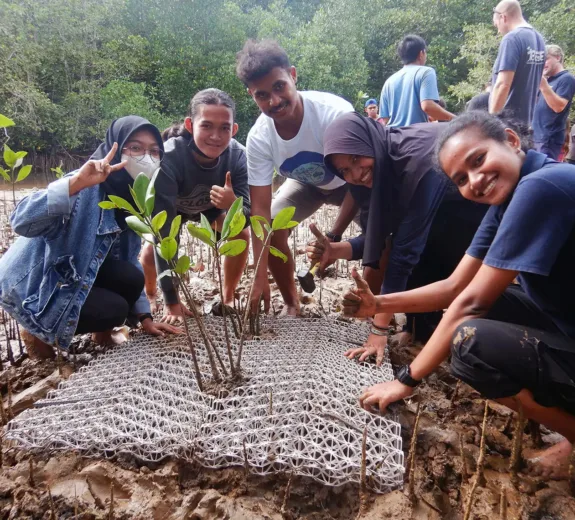
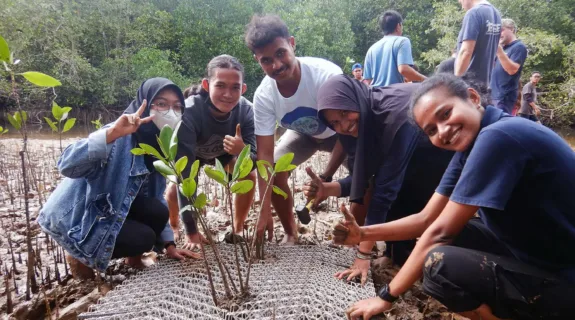
Twenty students from Pattimura University participated in hands-on training on installing BESE-elements with mangrove propagules and seedlings. They were also trained in monitoring the growth of the mangroves and are actively involved in tracking the progress of the restoration efforts.
Surviving storms
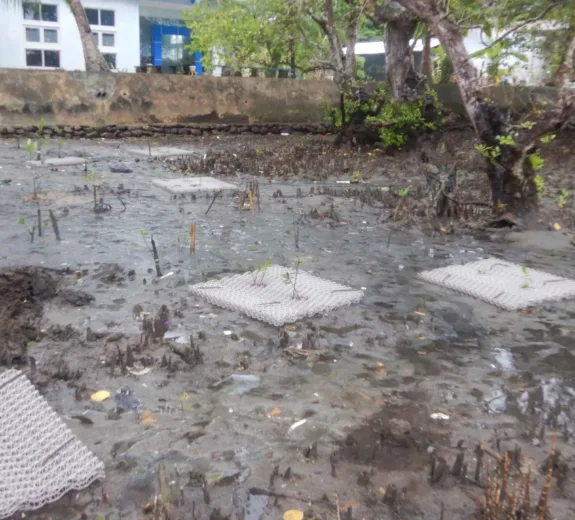
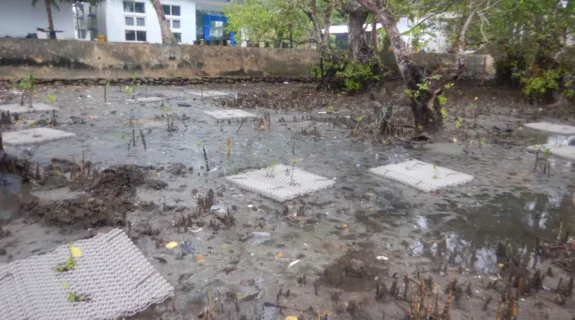
One of the mangrove restoration sites is located in front of the fisheries offices in Waai. During a severe storm, waves surged so high that they struck the offices behind the protective wall. Despite the intensity of the storm, only 40% of the BESE-elements plots with mangroves were lost. This incident underscores the strength and resilience of the BESE-elements, showcasing their effectiveness in protecting the organisms within and mitigating the impacts of natural disasters.
Propagules work better than seedlings
Our BESE-elements employ three methods for seed and propagule application: bundling propagules, bundling seedlings, and single propagules. Rhizophora propagules insertion proves most effective, followed by bundling seedlings with lower survival rates. Bundling propagules yielded minimal results. Conveniently, direct insertion of propagules into BESE-elements emerges as the most successful method.
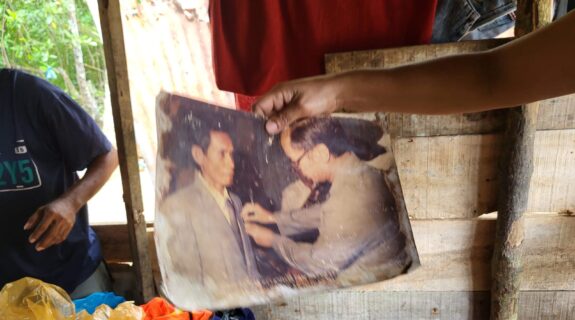
A boxer who became a conservation hero
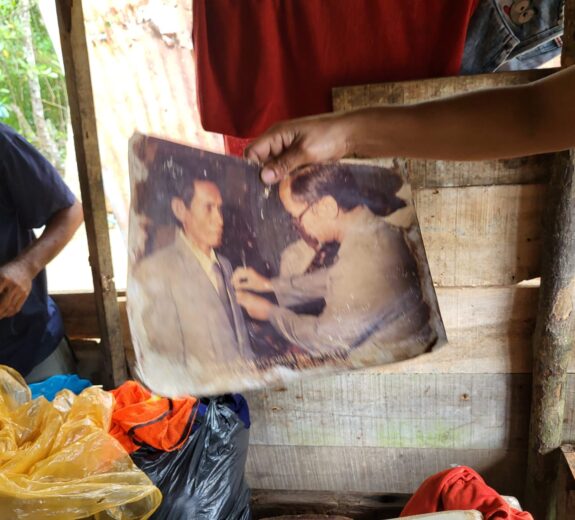
Our collaboration extends to a local mangrove conservation initiative, which has an inspiring backstory. A renowned local boxer, Dominggus Ledrick Sinanu, used to fish near the mangroves but witnessed a decline in fish catches coinciding with the loss of mangrove habitat. He transformed his life and became a dedicated conservationist of the forest. His commitment to conservation has left a lasting legacy, inspiring his children and grandchildren to continue his conservation efforts.
Connected coastal ecosystems
Mangroves, seagrass, and coral reefs form interconnected ecosystems crucial for coastal resilience. Mangroves provide protection, seagrass beds stabilize sediment, and coral reefs offer habitats. They rely on each other for nutrients, shelter, and biodiversity. This symbiotic relationship enhances ecosystem health, supports fish populations, and buffers coastal communities against climate impacts, emphasizing their integral connectivity for overall marine ecosystem function.
FAQ
Biodegradable structures provide temporary protection and stability without leaving waste behind. They mimic root networks, reduce erosion, and increase the survival rate of young mangroves. Over time, they fully degrade, allowing the ecosystem to develop naturally.
In Waai, the structures withstood two major storms. About 80% of the plots retained live seedlings and 60% kept their protective structure. This demonstrates that biodegradable materials can be effective even in dynamic coastal zones.
Students from Pattimura University are actively involved in installation, monitoring, and data collection. They measure survival, growth, and environmental factors such as sediment dynamics. This collaboration builds local expertise and ensures continuity of restoration efforts.
The three sites represent different risk levels: high (Ambon City), medium (Waai), and low (Passo). This allows us to test methods under varying conditions and develop strategies tailored to local dynamics.
Mangroves reduce wave energy, stabilize sediment, and provide habitat for fish and other species. Together with seagrass and coral reefs, they form a network that protects coastal communities from erosion and climate impacts.
Ecosystem development following installation
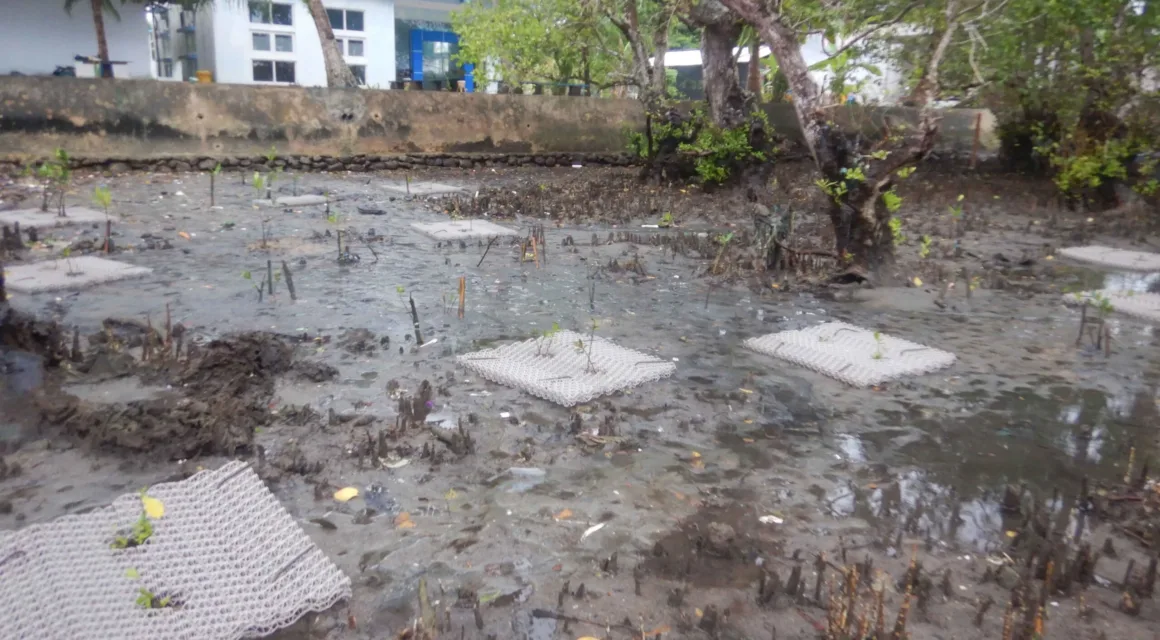
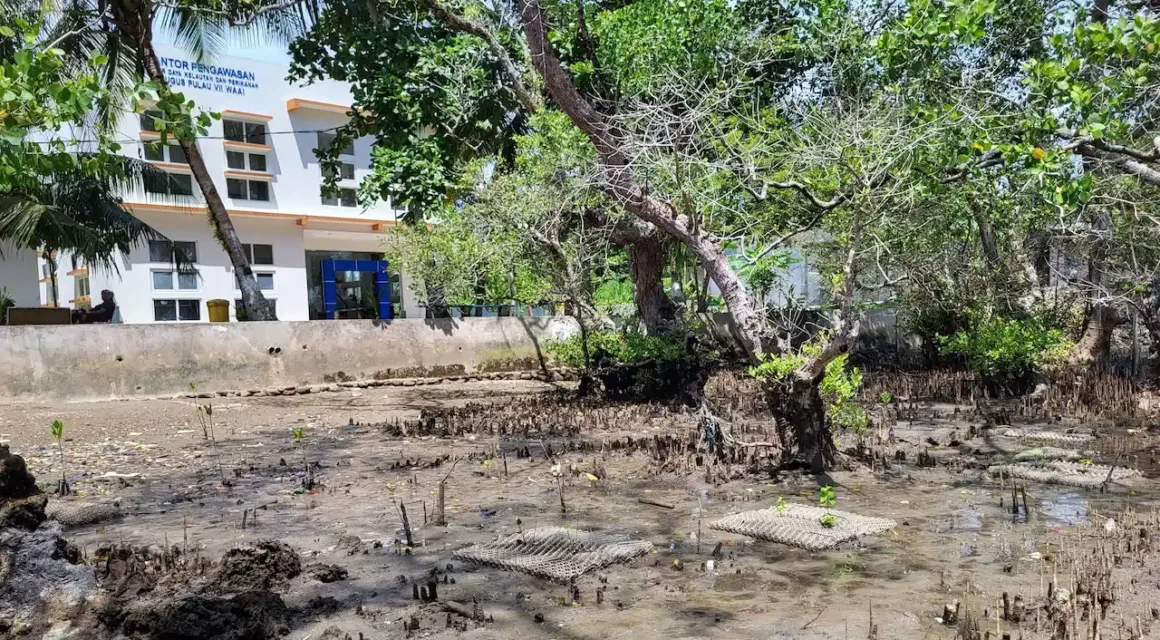
Results
- In Passo and Ambon city in 2024 each BESE-elements plot still had atleast one live and growing mangrove seedling
- In Waai two heavy storms ravaged the coastline 80% of the plots still had there seedlings and 60% of the plots retained their BESE-elements.
- Social aspects, such as pollution and physical damage negatively influenced the outcomes at Passo.
- The mangroves in the BESE-elements survived two heavy storms.
- BESE-elements substantially improve the survival rate of the seedlings.