


BESE-elements used as riverbank revetment to halt erosion along the riverbank and allow vegetation to flourish. A sustainable alternative to hard woord, concrete, riprap or metal revetments.
About this project

The restoration of an eroding riverbank in the Netherlands, with our BESE-elements. To replace the use of hardwood and increase the biodiversity along the riverbank.

Results achieved
- 600 meter riverbank restored
- Erosion halted
- Biodiversity increase
- Water quality increase
Project partners

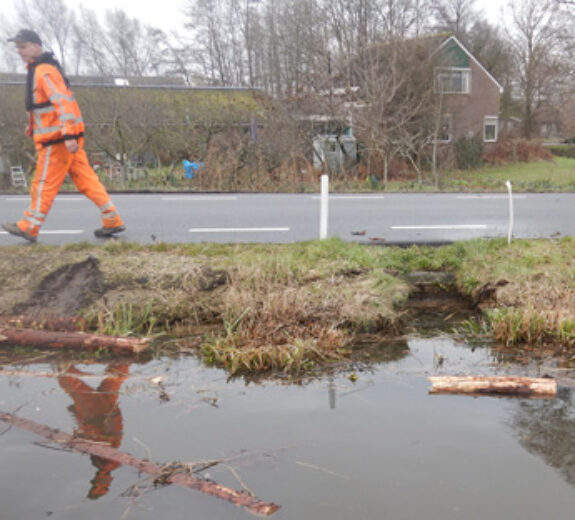
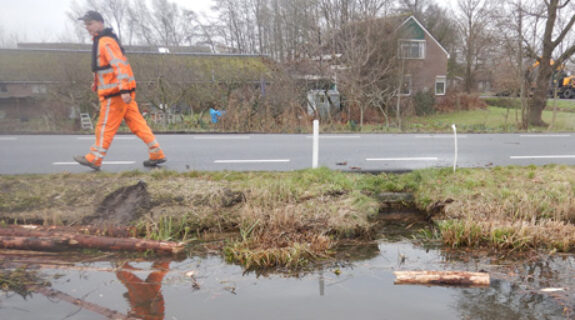
Eroding riverbank
The dike’s integrity was threatened by water erosion in the river bend, posing a risk of road subsidence and, in the worst-case scenario, a dike breach. Conventional restoration methods would result in continued erosion. An innovative solution was needed; BESE-elements.
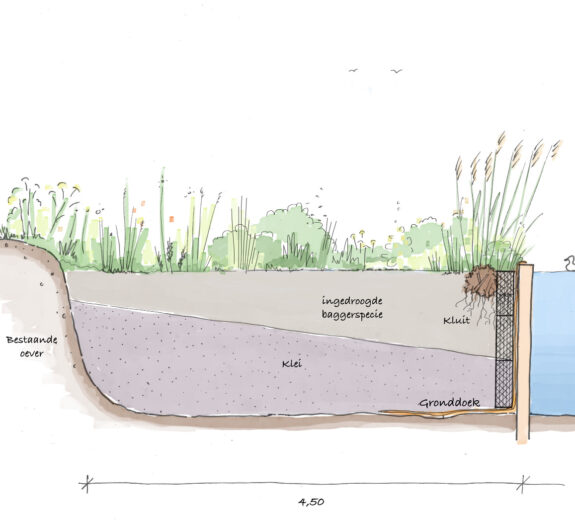
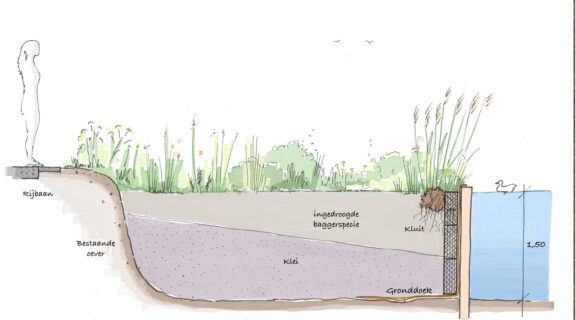
BESE-elements instead of wooden poles
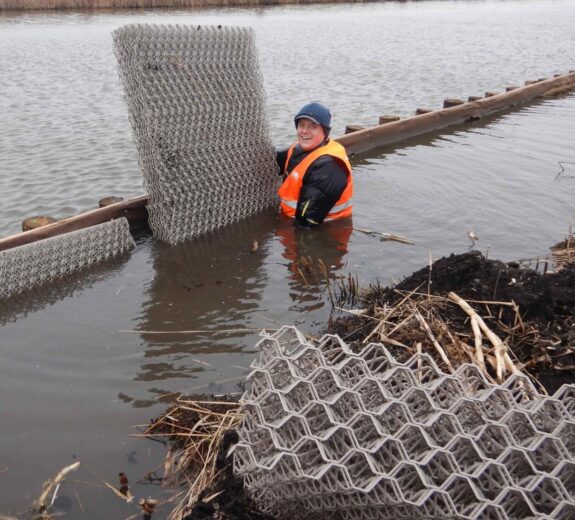
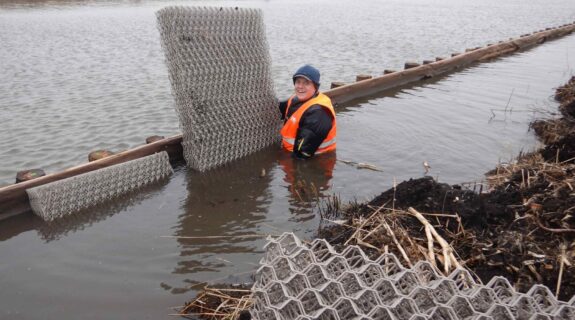
Instead of placing wooden poles side by side, two-thirds were left out, and BESE-elements were installed instead.
The lattice structure of these elements attenuates wave energy (halts erosion), allows roots to grow through and provides habitat for fish and other fauna.
Nature based advantages
As the erosion becomes negligible vegetation can grow unhindered and will keep the riverbank stabalized in the future. The roots will take over the function of the biodegradable BESE-elements.
Moreover the vegetation improves life for insects, amphibians and birds and provides food for fish and other macrofauna that shelter in the BESE-elements under water.
Nature-based approach to riverbank restoration
Globally, plastic, concrete, and occasionally bitumen are employed to stabilize riverbanks. Aside from their ecological insignificance, these materials can pollute the environment, with plastic and bitumen posing risks of micropollution generation, detrimental to organisms.
The impact of micropollution on ecosystems often becomes evident only after significant damage has occurred. Remediation of polluted riverbanks is costly and requires rebuilding. A nature-based approach can prevent such damage, offering a sustainable solution to mitigate pollution and preserve riverbank integrity.


Results
- 600m Riverbank restored
- Erosion halted
- Biodiversity increase above and below water
- Water quality increase
- No future maintenance
- 1320 trees saved from becoming riverbank protection
- No plastic or polluting materials used