


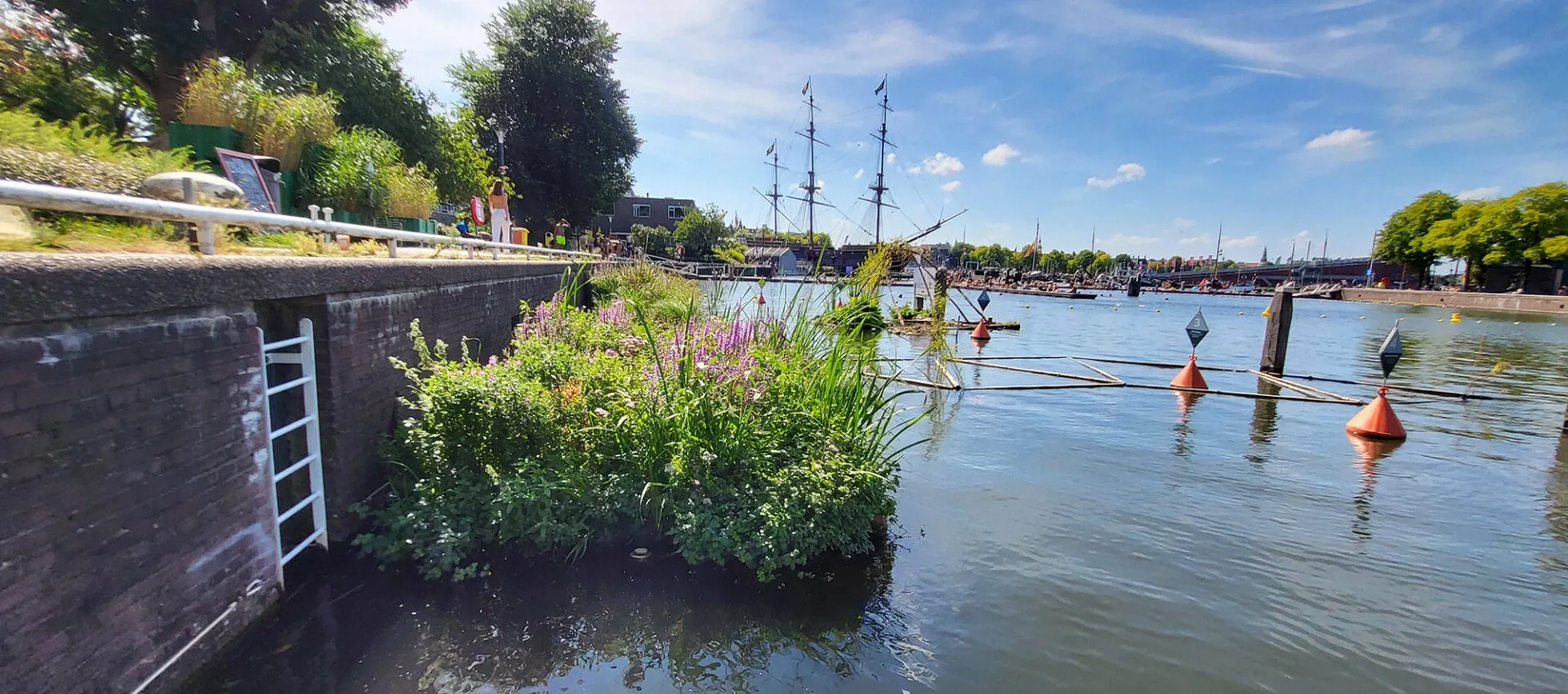

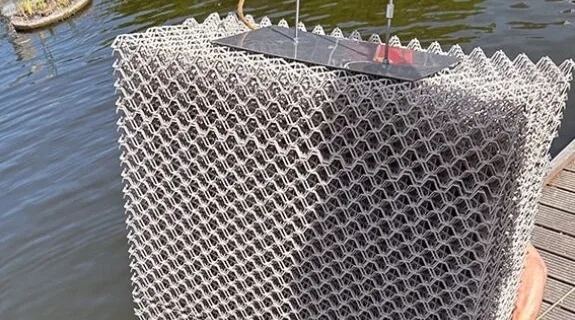
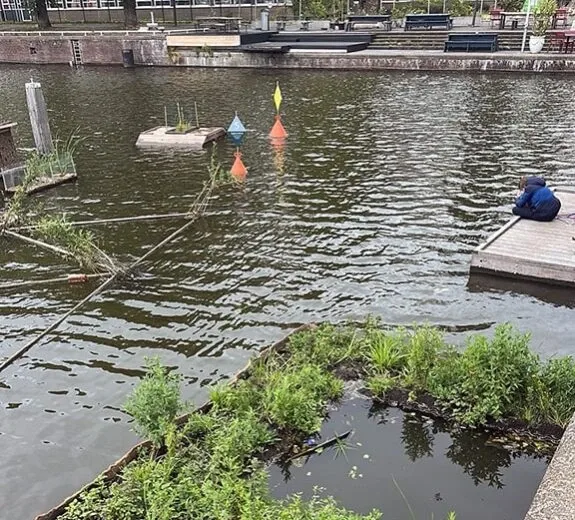
At the historic Marineterrein in Amsterdam, BESE-elements have been installed to create a natural water filter. These biobased structures attract water-filtering organisms that continuously purify the water and enhance ecological quality.
Restoring Urban Waters with Nature-Based Solutions


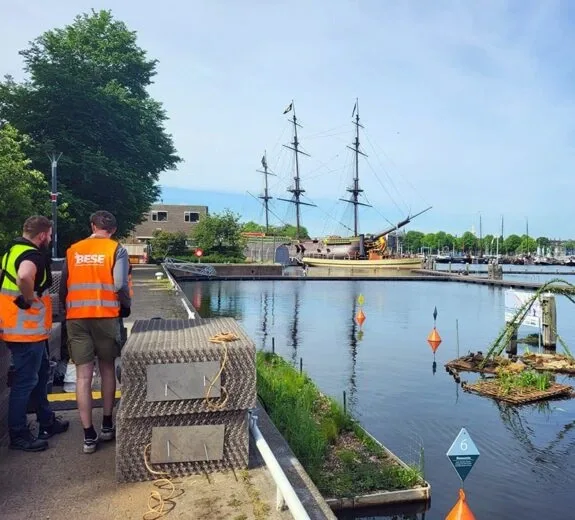
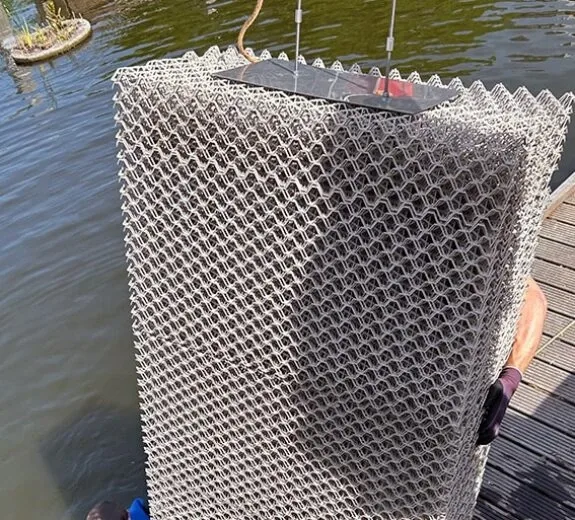
Sixteen BESE-element towers, each over 2 meters high, provide habitat for filter-feeding species. Together, they form a living water filter that works 24/7. Thereby, improving water quality for swimmers in Amsterdam and boosting local biodiversity.

Results achieved
- 16 BESE-element towers of >2m depth for waterfiltering organisms
- Natural waterfilter
- Hiding spots for juvenile fish
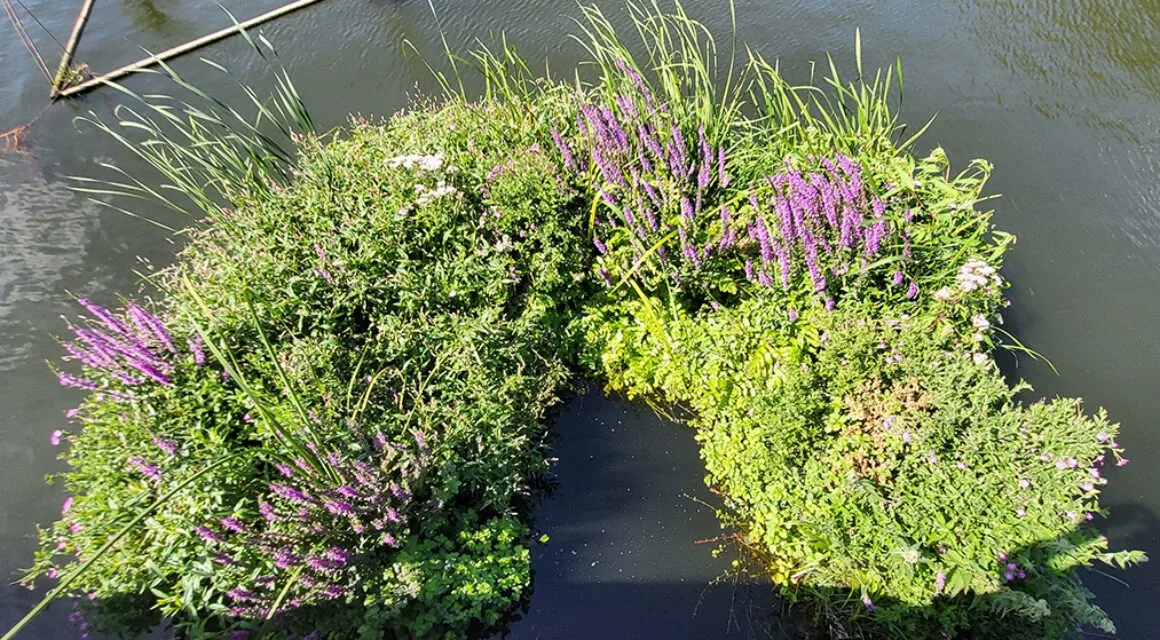
- Green in the city center
Project partners

Why It Matters
- Cleaner, healthier city waters
- Increased ecological resilience
- More biodiversity in urban environments
How It Works
The open, complex structure of BESE-elements offers ideal conditions for marine life:
- Shelter and flow: Safe hiding spots combined with optimal water circulation
- Natural filtration: Mussel and sponge larvae settle easily and grow into organisms that filter harmful algae and pollutants
Did you know?
One freshwater mussel can filter up to 7 liters of water per day. Multiply that by thousands, and you have a powerful, cost-free water purification system.
Benefits Over Mechanical Filters
- No pumps, no maintenance
- No CO₂ emissions—only CO₂ capture through biomass growth
- Biodegradable and biobased: Made from potato starch waste streams
- Plastic-free and circular
By letting nature do the work, we eliminate the need for expensive equipment and reduce environmental impact.
Boosting Biodiversity
- Creates mussel beds and natural reefs that can support up to 100 species in urban waters
- Provides nursery habitats for juvenile fish and macrofauna
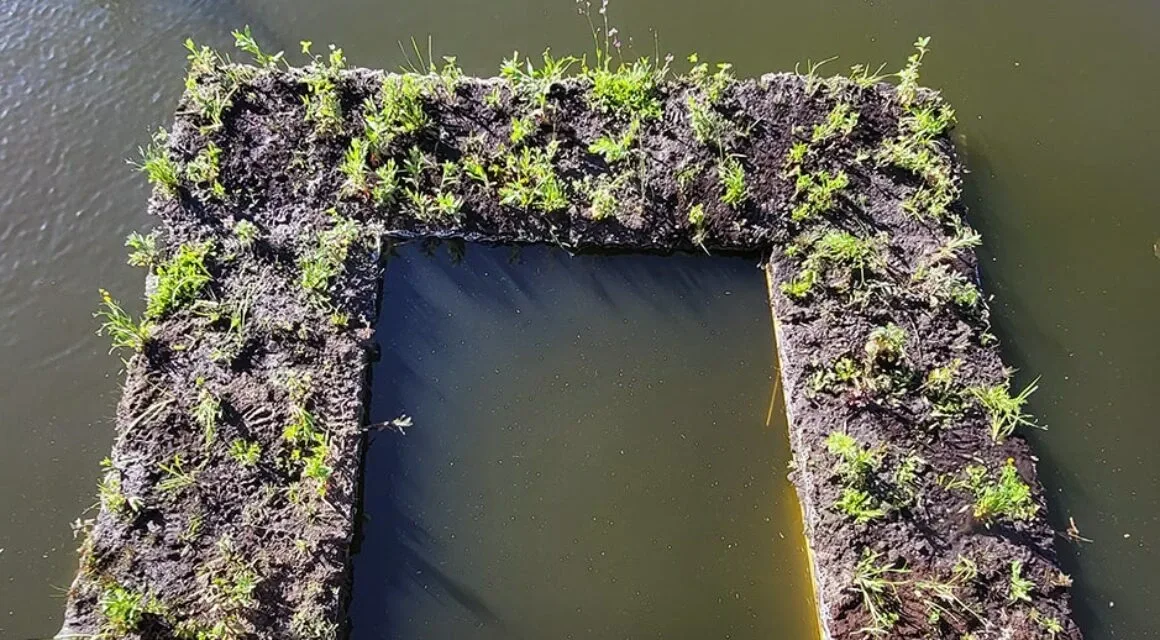
- Encourages plant growth above water, attracting pollinators like bees
- Enhances underwater vegetation for fish eggs and insect habitats
Environmental Impact
- Continuous water filtration
- Green waterfronts in the city
- No CO₂ emissions
- CO₂ storage in growing biomass
Project Highlights
- 16 BESE-element towers (>2m deep)
- Natural water filter
- Fish shelters and urban greenery
- Partners: City of Amsterdam, Sail, Waternet, Dobbernatuur, Marineterrein Amsterdam