


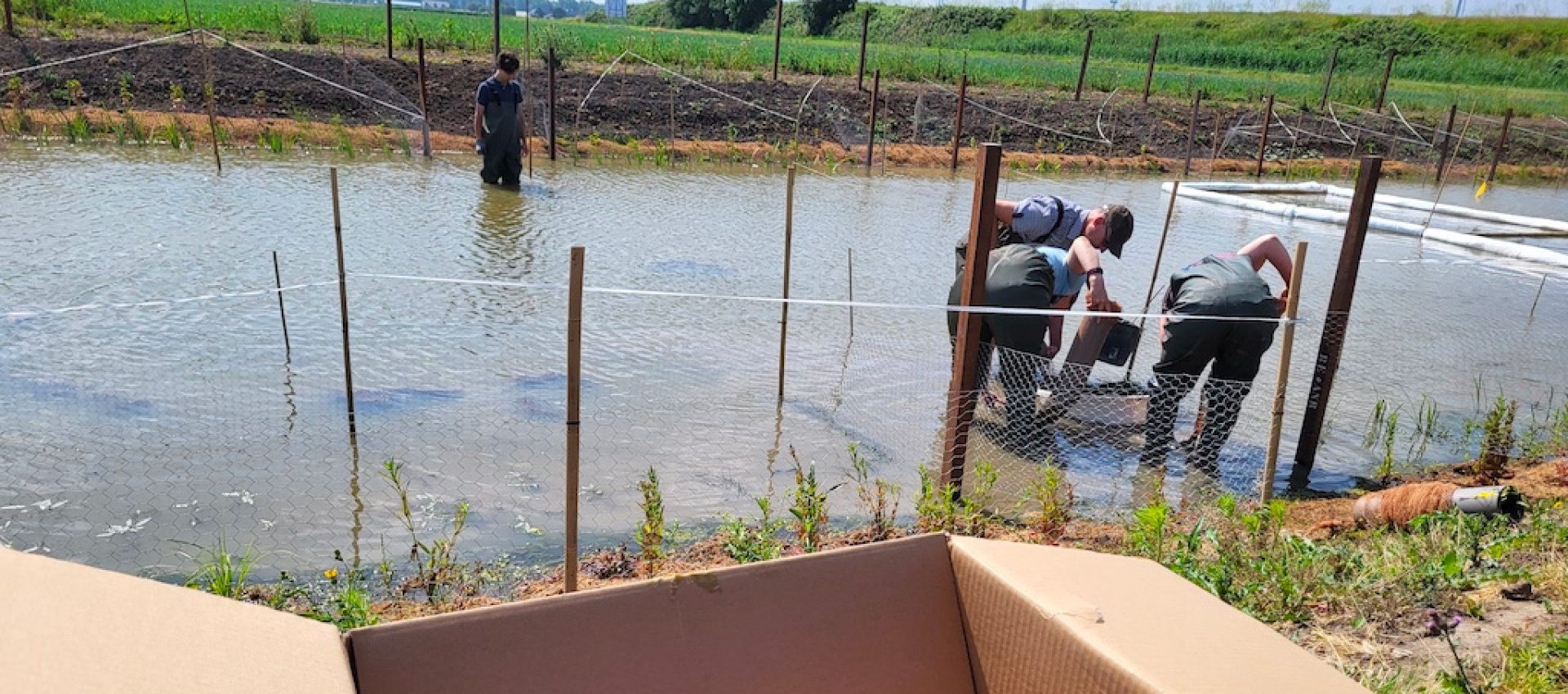

Oak resin coated BESE-mesh cellulose was used to transplant five different plant species to a new water body, to kickstart the growth.
About this project

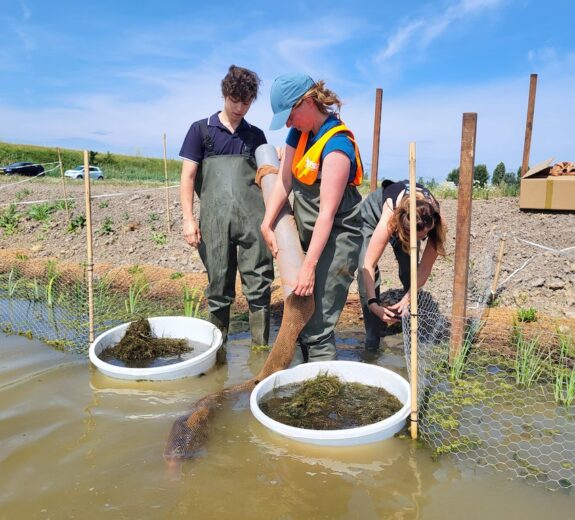
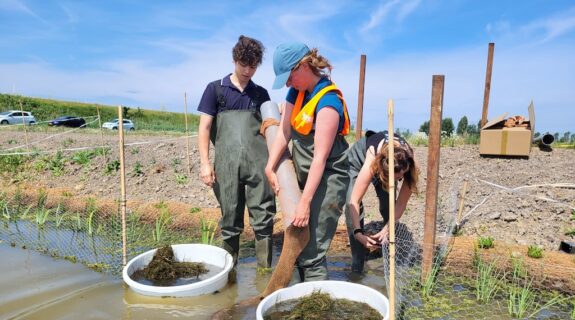
Five different plant species were gathered from places where they were abundant. They were then placed, like you fill a sausage, in our BESE-mesh and pinned to the bottom. At least one species is thriving.

Results achieved
- 5 x 15m2 of aquatic plants transplanted
- Myriophyllum spicatum was transplanted successfully (the rest is to early to say)
Project partners


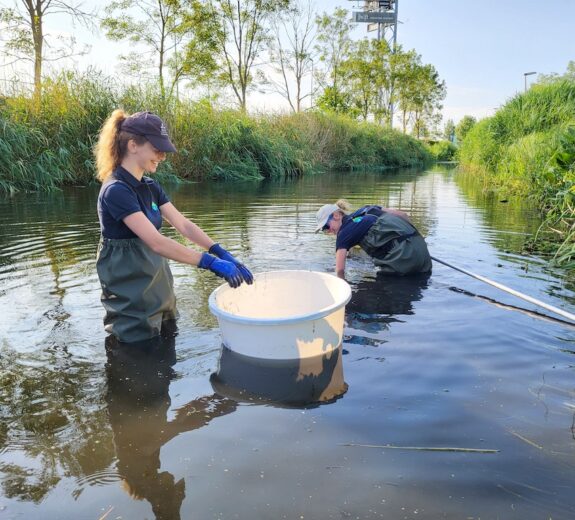
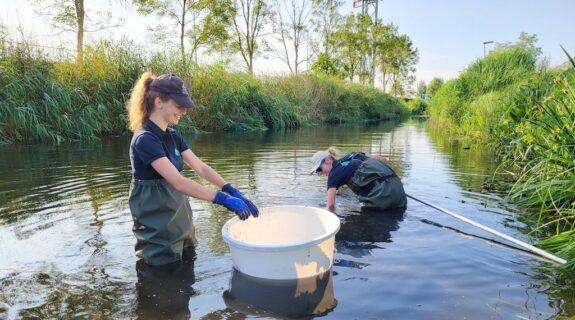
Aquatic plant transplantation method
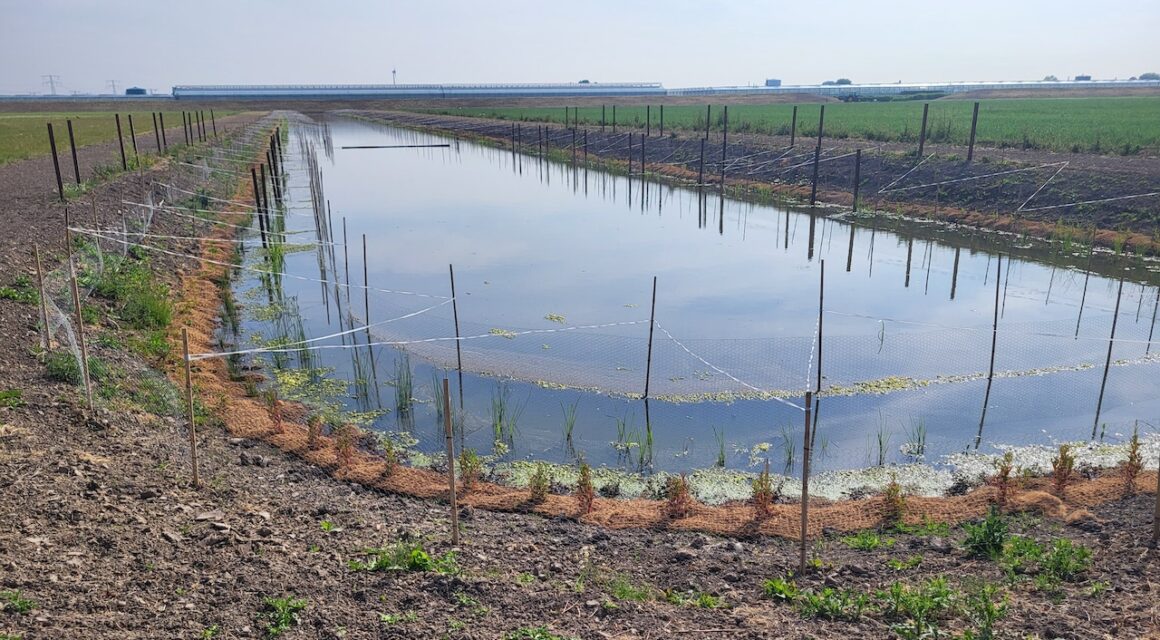
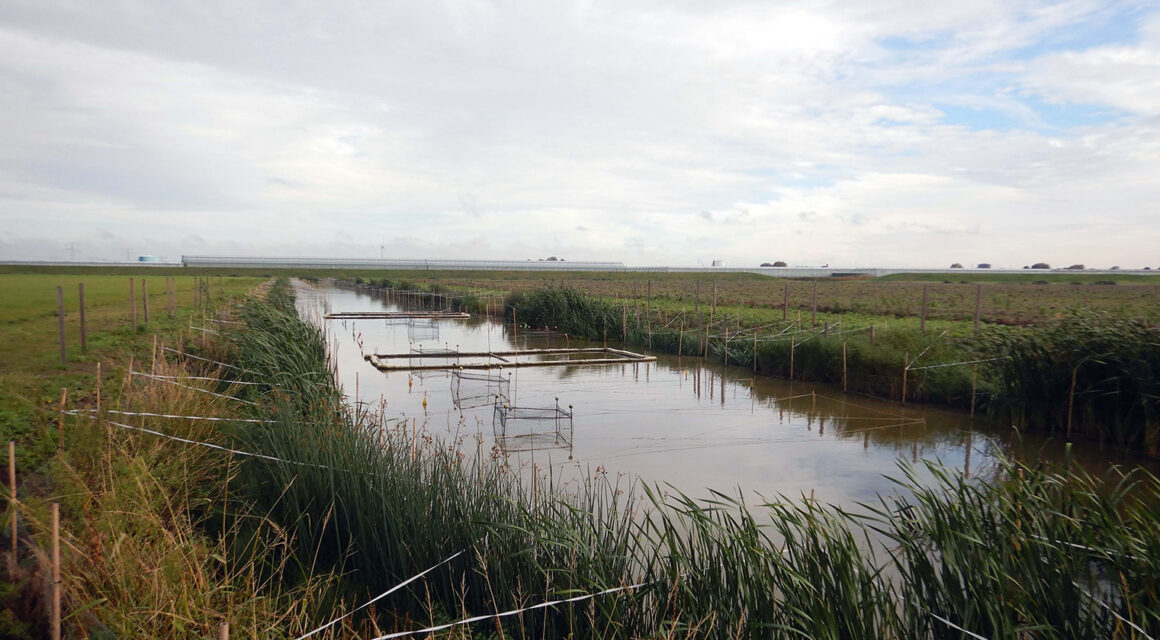
BESE-mesh was filled with different species of aquatic vegetation, collected from local sites where it was growing abundantly. The mesh was then pinned to the bottom of the waterbody, arranged in rows covering 15m2. Each square was designated and marked with biodegradable flags to aid in location identification and to deter birds.
BESE-mesh degradation
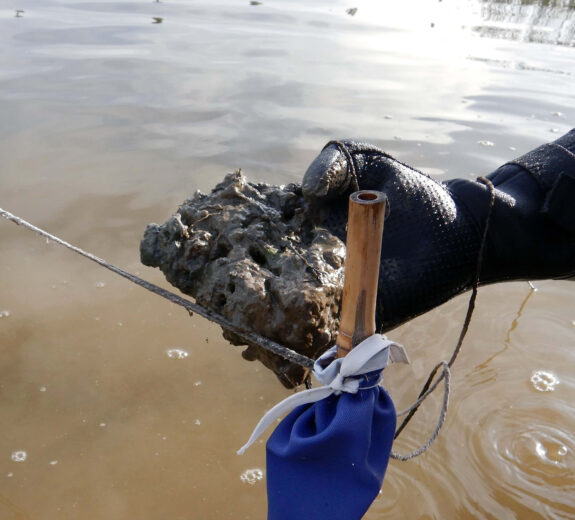
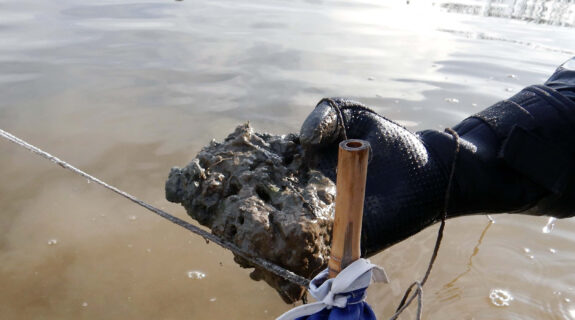
BESE-mesh can degrade within weeks if in contact with water. By coating our BESE-mesh cellulose with a with oak resin we make the mesh more durable. Thereby ensuring the mesh would securely hold the vegetation in place for a month, allowing roots to take hold while the mesh degrades.
Monitoring results year 1
In the first year Myriophyllum spicatum had successfully settled in the designated plot, validating the effectiveness of our innovative transplantation method. Additionally, numerous waterbirds were spotted, indicating live had returned to the waterway. Ongoing monitoring will determine if other species have also successfully established themselves.
Aquatic plants improve water quality
Submerged aquatic vegetation is of vital importance to the water quality in rivers and lakes. They filter the water, provide habitat for all kind of macrofauna and serve as a food source for birds and fish. Unfortunately, in a lot of waterways aquatic vegetation has been lost, due to anthropogenic effects like dredging.
Restoring aquatic vegetation is challenging, trials are underway with BESE-elements and now BESE-mesh is used in a restoration trial. Monitoring results will indicate which method works best for which type of waterways.
Results
- 15m2 of the following vegetation was transplanted in BESE-mesh:
- Sago pondweed, Stuckenia pectinata (Schedefontijnkruid)
- Hornwort, Ceratophyllum demersum (Grof Hoornblad)
- Small pondweed, Potamogeton pusillus (Tenger fontijnkruid)
- Water-starwort, Callitriche palustris (SterrenKroos)
- Eurasian watermilfoil, Myriophyllum spicatum (Aarvederkruidkruid)